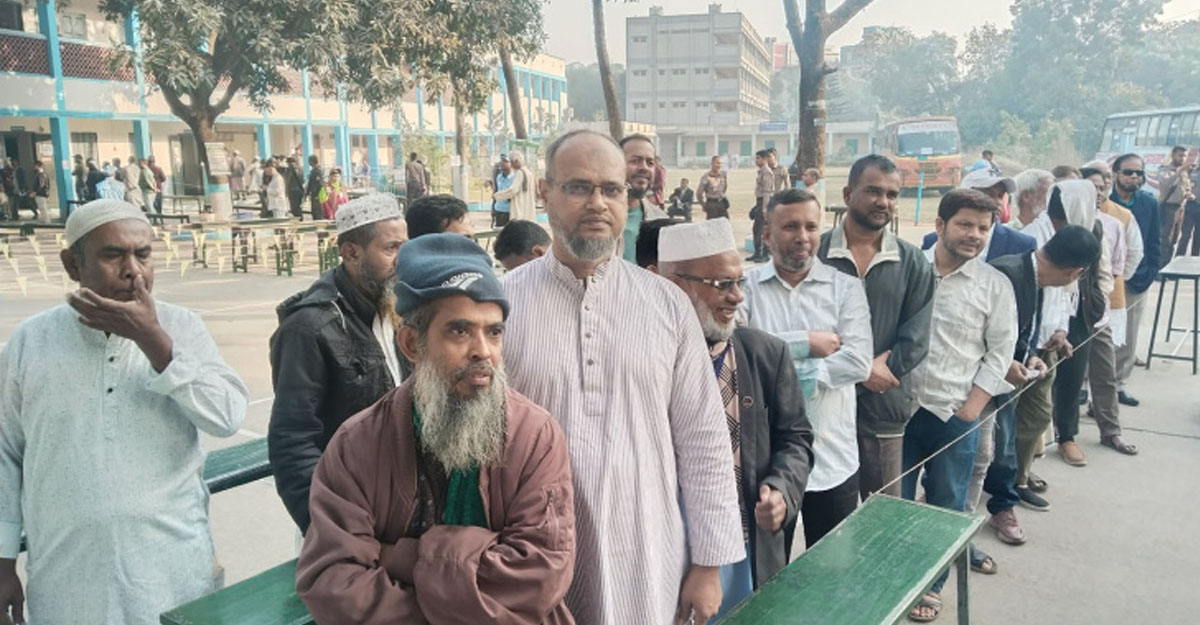
Voting began Thursday morning across Bangladesh, marking the country’s first election since massive student-led protests 18 months ago forced then-Prime Minister Sheikh Hasina from power.
According to local reports, polling started around 7:30 a.m. at 42,779 polling centers nationwide. The Bangladesh Election Commission has scheduled voting to continue until 4:30 p.m. There are approximately 127.7 million registered voters, including 64.8 million men and 62.8 million women.
Alongside the parliamentary elections, voters are also casting ballots in a national referendum on the July Charter, which is expected to shape the direction of the country’s governance in coming years. The charter includes provisions on constitutional amendments, strengthening the balance of power among the executive, legislature, and judiciary, improving the electoral system, ensuring human rights and accountability, and enhancing institutional transparency and anti-corruption measures.
A total of 1,755 candidates from 50 political parties are contesting the parliamentary polls, while 273 candidates are running as independents. Elections are being held for 299 of the 300 seats in the Jatiya Sangsad (National Parliament); voting in Sherpur-3 has been postponed following the death of a candidate.
To ensure a peaceful election, authorities have deployed about 1 million security personnel nationwide. These include:
- 100,300 Army personnel
- 5,000 Navy
- 3,730 Air Force
- 37,453 Border Guard Bangladesh
- 3,585 Coast Guard
- 187,603 Police
- 9,349 Rapid Action Battalion
- 576,483 Ansar and Village Defense Party members
- 1,922 BNCC cadets
- 45,820 guards and assistants
In addition, 1,051 executive magistrates have been mobilized through February 14. Armed forces are supporting civil authorities under the “Aid to Civil Power” provision.
According to Police Chief Baharul Alam, every polling center has permanent security, mobile patrol teams outside, and strike units on standby if needed. Thousands of election officials are also deployed to oversee voting and counting.
The election has become a competitive contest mainly between two major alliances led by Bangladesh Nationalist Party (BNP) leader Tarique Rahman and Jamaat-e-Islami.
The ruling Awami League has been barred from participating after being accused of involvement in repressive actions that killed at least 1,400 people during the 2024 protests. The protests turned violent in July 2024, prompting Sheikh Hasina to flee the country; she is currently in India.
On Tuesday, Nobel Laureate and chief adviser Professor Muhammad Yunus urged citizens in a national address to treat election day as the birth of a new Bangladesh, saying voters will write the future history of the nation.
About the Author