Nepal’s “I Will Build The Nation” movement. Scientific approach to national development, brain drain solutions, good governance, and citizen-led vision documents. Dr. Paudel’s plan.
For decades, Nepal’s national development discourse has been bogged down by political rhetoric, emotional appeals, and the pervasive culture of complaining in teashops and on social media. A monumental initiative, “I Will Build The Nation” , led by the distinguished scientist Dr. Kapil Paudel, has launched with a clear mission: to fundamentally shift the country’s trajectory by anchoring progress in science, data, and systematic planning rather than fleeting emotion.
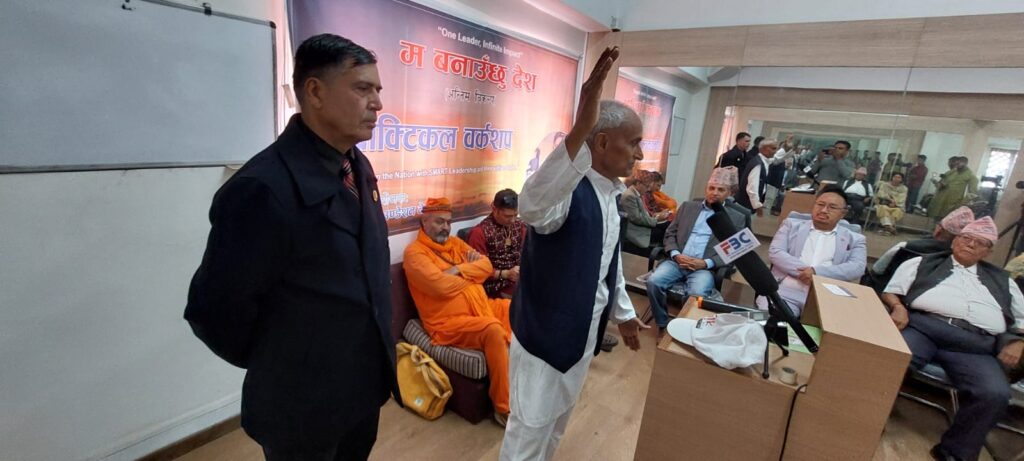
This campaign is not merely another civil society effort; it is a declaration of intellectual and cultural transformation, committed to converting widespread despair into constructive action. The successful completion of its first practical workshop marks a pivotal moment, demanding an in-depth examination of its philosophy, methodology, and potential to redefine civic engagement in Nepal.
I. The Revolutionary Core: Leadership and Philosophical FoundationsThe most distinctive and revolutionary aspect of the “I Will Build The Nation” campaign is its leadership. By placing an established scientist, Dr. Kapil Paudel, at the helm instead of a political figure, the initiative boldly asserts the primacy of objectivity and rationality over political self-interest.
The Thesis: Science Over Emotion Dr. Paudel’s core thesis -“Science, not emotion, builds the nation” serves as the campaign’s ideological blueprint. He differentiates clearly between the energy required for a momentary uprising and the discipline necessary for sustainable development.
The Patient-Doctor Analogy: Dr. Paudel’s analogy is highly instructive: problems must be treated like an illness. A skilled physician (the campaign) doesn’t treat superficial symptoms (complaints, frustration) but utilizes systematic testing (data collection, analysis, research) to pinpoint and eradicate the root cause of the disease. This demands solutions that are evidence-based, effective, and implementable.
Embracing Intellectual Accountability: The campaign aims to foster an intellectual culture where every Nepali citizen shifts their focus from the passive question, “What has the nation given me?” to the active and responsible query, “What can I give to the nation?” This shift is central to cultivating long-term civic duty and ownership.
II. Context: The Birth of Hope Amidst DespairThe campaign emerged as a direct and organized response to the crippling conditions that define contemporary Nepal:Political Instability and Corruption: Perpetual political flux and systemic corruption have eroded public trust and stalled infrastructural and policy continuity.
The Brain Drain Crisis : A dysfunctional education system and the scarcity of lucrative domestic opportunities have driven a massive exodus of skilled youth and professionals, crippling the country’s human capital base.Culture of Futile Complaining: Public discourse often cycles through complaints without ever reaching the stage of concrete planning or collective action. The campaign’s creation of a platform dedicated to seeking solutions directly counters this entrenched complacency.The organizers acknowledge the universal grievance “The nation hasn’t been built” but stress that their mission is to address the missing link: “How to build the nation?”
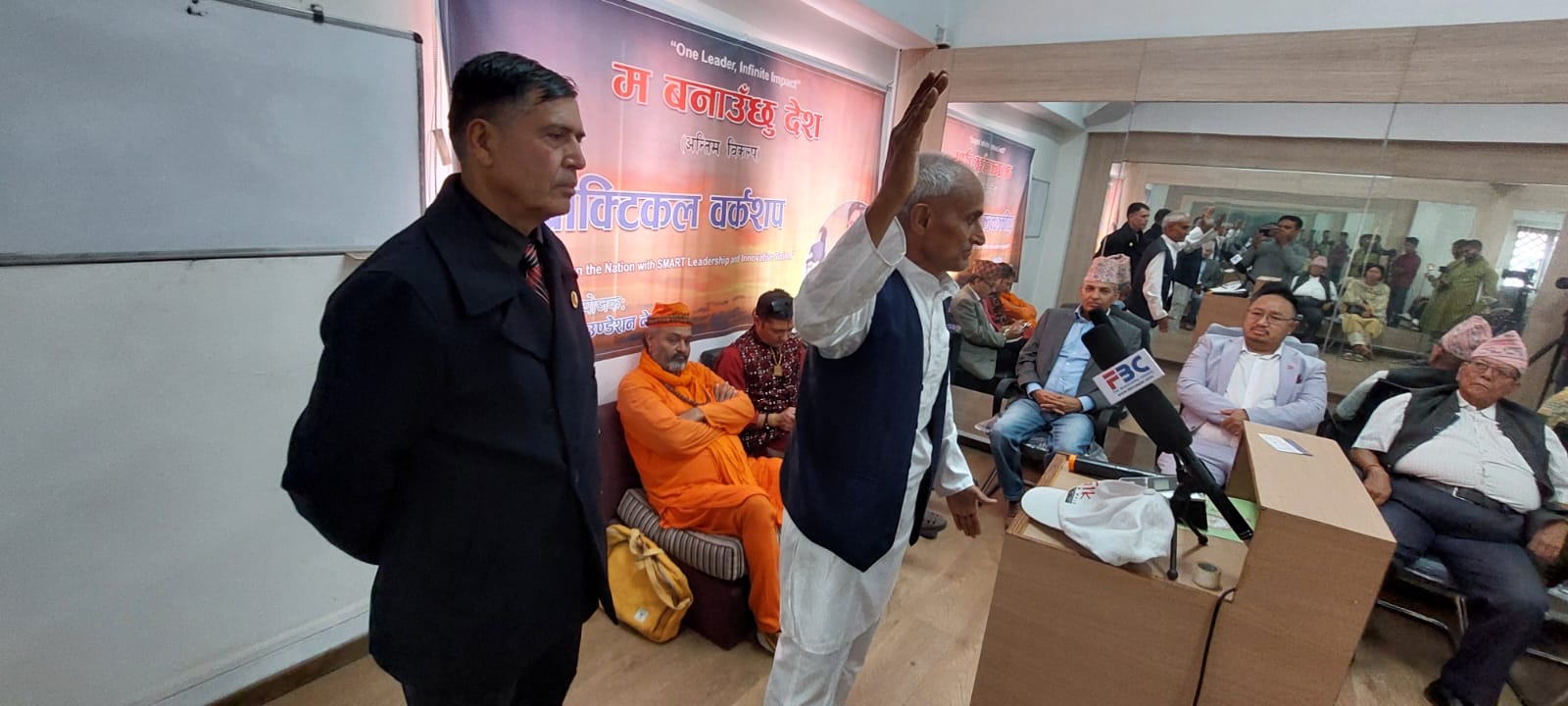
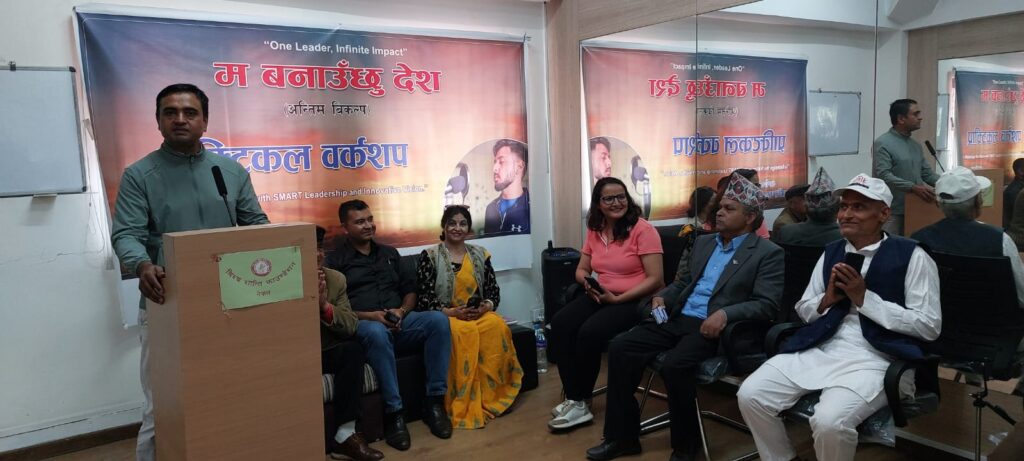
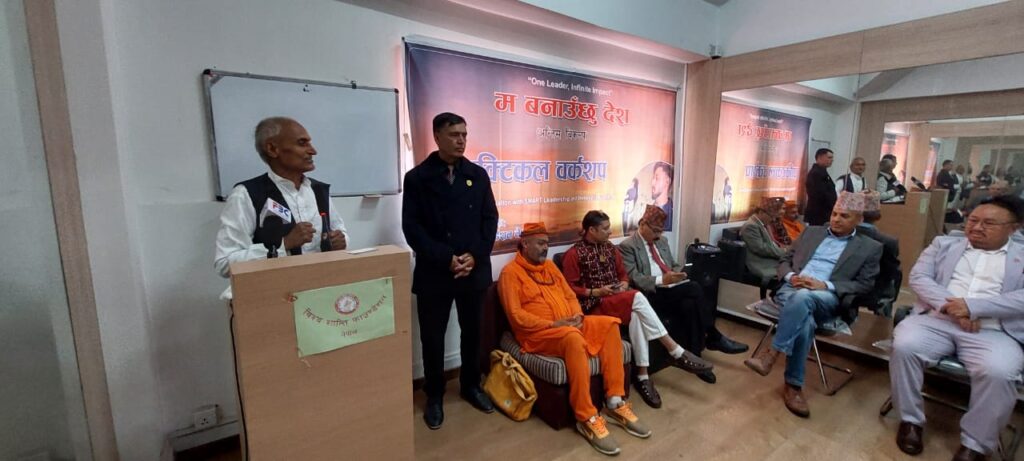
III. The Practical Workshop: Methodology and Tangible OutputsThe inaugural workshop was designed to be output-oriented, moving swiftly past theoretical debate to the creation of actionable blueprints.
A. Strategic Sectoral AnalysisParticipants, segmented by expertise, engaged in rigorous analysis guided by the scientific mandate of the campaign:
Sectoral Focus Problem Analysis Method Key Outcome Example
Agriculture – Identifying root causes like poor technology, lack of direct market access, and reliance on middlemen.
Proposal for a digital ‘Farm-to-Market’ platform to bypass intermediaries and ensure fair pricing.
Good Governance- Analyzing bureaucratic red tape, lack of transparency, and resistance to digital transformation.
Development of a practical ‘Single-Window System’ model to simplify and expedite government service delivery.
Technology/Brain Drain- Focusing on the lack of policy support and infrastructure for tech innovation and retaining talent.
Youth presenting coding and software prototypes for solutions, emphasizing the application of foreign-acquired skills back home.
B. Synergy of Skill and Resource – A crucial element of the workshop was the deliberate combination of resources to solve the Brain Drain problem organically:
Repatriated Talent: Young professionals who had acquired skills and technology abroad showcased their expertise, detailing how it could be localized and applied to Nepal’s specific challenges.
Local Capital: Domestic entrepreneurs offered their experience and pledged investment and collaboration with these innovators, providing the necessary seed capital and market access for new, technology-driven solutions. This creates a sustainable cycle that encourages skilled migrants to return.
C. The “Citizen Blueprint” Vision Document – The most significant immediate product of the workshop is the preliminary “Citizen Blueprint for a Prosperous Nepal” Vision Document.
This document is a collective, non-governmental policy framework, synthesized from the best ideas and plans generated across all sectors.
Its purpose is to serve as a high-integrity, data-supported instrument for policy advocacy , intended to be presented to relevant government bodies and policymakers. Its existence shifts the policy discourse from politically motivated proposals to citizen-vetted, expert-driven recommendations.
IV. The Roadmap Ahead and Critical ChallengesThe campaign views the initial workshop as merely the foundation, with an ambitious plan for national expansion.
Nationalization and Digital Inclusion –
Provincial Solution Workshops: The campaign will be expanded to all seven provinces to host similar practical workshops. This regional focus ensures that solutions are tailored to local challenges, incorporating diverse geographical and economic data.
Digital Platform Development: A dedicated digital platform will be created to allow citizens nationwide to contribute their ideas, plans, and skills remotely. This strategy ensures inclusivity and maintains continuous, data-rich engagement beyond physical events.
Sustained Advocacy: The campaign is committed to the continuous and persistent advocacy for the implementation of its policy suggestions, holding governmental bodies accountable for utilizing citizen-led solutions.
The Barriers to Implementation – While the ideological foundation is robust, the practical execution faces formidable challenges inherent to Nepal’s system:
Political Resistance and Bureaucracy: The primary hurdle is ensuring that the highly rational and data-driven proposals are not simply shelved by a political establishment often resistant to change and prone to corruption. The campaign must find a way to make its non-political proposals politically imperative.
Sustainability of Momentum: Historically, highly energized citizen movements in Nepal often fade away. The campaign must secure long-term financial and human resources and maintain its integrity to avoid being co-opted or diluted by political interests. The initial energy must evolve into sustained, organized effort.
Scaling up Solutions: Translating pilot project blueprints (like the single-window model) developed by small groups into national, standardized policy across diverse geographies requires immense coordination and political will.
Conclusion: A Beacon of Rational HopeThe “I Will Build The Nation” campaign, under Dr. Paudel’s scientific stewardship, is more than an organization; it is the genesis of an intellectual renaissance. It rejects the cyclical despair of the past by providing a concrete framework for engagement.By lighting the lamp of knowledge and logic, the campaign encourages every Nepali to embrace their role as a solution provider and a nation builder. The success of this movement will not only depend on the brilliance of its ideas but on its ability to transcend Nepal’s entrenched political inertia and transform those data-driven blueprints into a prosperous reality. The era of complaints is challenged; the era of scientific action has begun.
About the Author