Web Post - 7
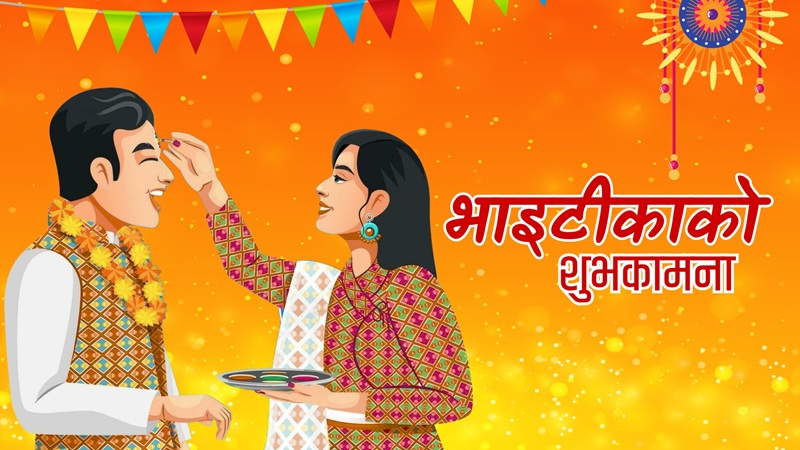
Bhai Tika, the main day of the festival of lights Tihar, also known as Yama Panchak, is being celebrated across Nepal today. On this auspicious day, sisters offer Panchrangi (five-colored) or Saptarangi (seven-colored) Tika to their brothers with devotion, faith, and love, praying for their long life, good health, and prosperity.
Bhai Tika is celebrated annually on Kartik Shukla Dwitiya. Although Tihar is generally a five-day festival, this year Bhai Tika falls on the sixth day due to the addition of an extra lunar date (tithi vriddhi), according to the Nepal Panchang Nirnayak Samiti.
After sisters put Tika and garlands on their brothers, brothers also bless their sisters by applying Tika in return. According to religious scriptures, worshipping sisters on this day brings eternal good fortune and prosperity, said Prof. Dr. Devmani Bhattarai, a member of the Nepal Panchang Nirnayak Samiti.
Although Bhai Tika can be performed at any time throughout the day, the auspicious time (Sait) for those who follow is 11:39 AM (Abhijit Muhurta), informed committee chairman Prof. Shambhu Prasad Dhakal.
This year, it is advised that sisters face east while applying Tika and brothers face west while receiving it. This ensures that the Moon in Libra remains in front of the brothers, as lunar alignment is considered auspicious during holy rituals.
Before applying Tika, sisters worship the Diyo (lamp), Kalash, and Lord Ganesha placed during Lakshmi Puja. They also offer prayers to the Ashta Chiranjivi (Markandeya, Ashwatthama, Bali, Veda Vyasa, Hanuman, Vibhishana, Kripacharya, and Parashurama), as well as Chitragupta, Yamraj, Yamuna, Dharmaraj, Ganesha, Navagraha (nine planets), and other deities. Sisters then offer Tika, Makhamali (Globe Amaranth) and Sayapatri (Marigold) garlands, along with a ritual oil blessing.
While Saptarangi Tika has been widely publicized in recent years, scriptures mention five colors—red, white, yellow, green, and blue—as traditional for Bhai Tika, according to Dr. Bhattarai.
After the ritual, sisters offer traditional foods such as walnuts, spiced nuts, sweets, and Sel Roti to their brothers. In return, brothers give gifts or Dakshina to their sisters as a symbol of love, respect, and blessings.
If you want, I can also provide a short news version for media or website publishing. Would you like that?
About the Author