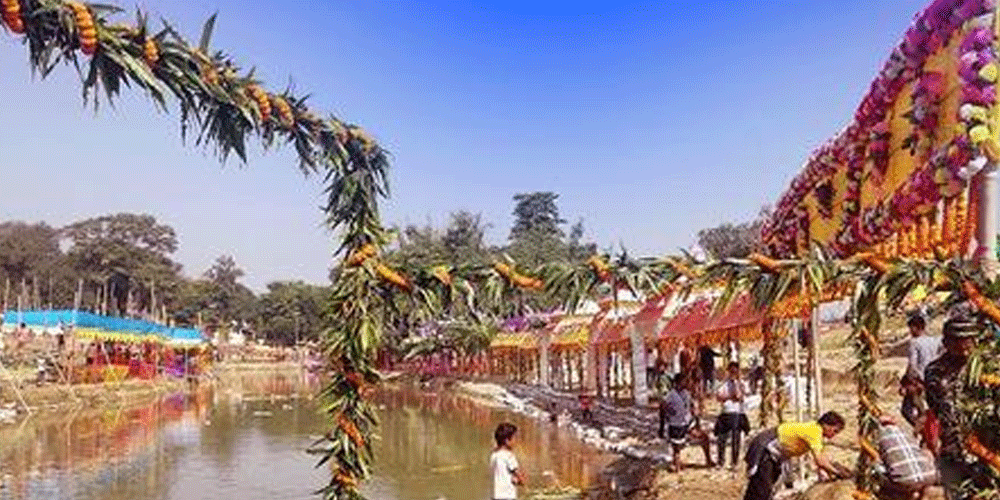
With the conclusion of Tihar, preparations for the Chhath festival have begun in Kathmandu and various districts of the Tarai. Along the Bagmati River near Guhyeshwari in the Pashupatinath area, Chhath ghats (worship sites) are being beautifully decorated and constructed from Guhyeshwari to Gaushala Gaurighat. Every year, hundreds of Chhath ghats are built in this area, and the festival is celebrated with great devotion. Cleaning, leveling of soil, and other preparations are currently underway. Similarly, Chhath celebrations also take place at Kamal Pokhari, Nag Pokhari, and other locations in the capital.
Chhath is celebrated by offering argha (ritual offerings) to the setting and rising sun. The Chhath ritual begins from the day after Kojagrat Purnima, which is Kartik Krishna Pratipada. Those observing the Chhath fast (vrat) enter the Chhath ghats and begin the ritual from this day, maintaining purity by avoiding garlic, onion, and other tamasic foods.
On Kartik Shukla Panchami, devotees consume Kharna, a special meal prepared with pure ingredients such as jaggery and ghee. This is considered an important part of the Chhath ritual. On the main day of Chhath, devotees offer argha to the setting sun in the evening. This year, the main day of Chhath falls on Monday, Kartik 10. The festival concludes the following morning after offering argha to the rising sun.
Celebrated in an agricultural country, Chhath is closely linked with farming traditions. This is the time when freshly harvested crops enter farmers’ homes, and they offer these grains to the deities as an expression of gratitude. In recent years, Chhath has gained popularity in hilly regions as well, including Kathmandu, and is now celebrated with great enthusiasm across Nepal.
About the Author