
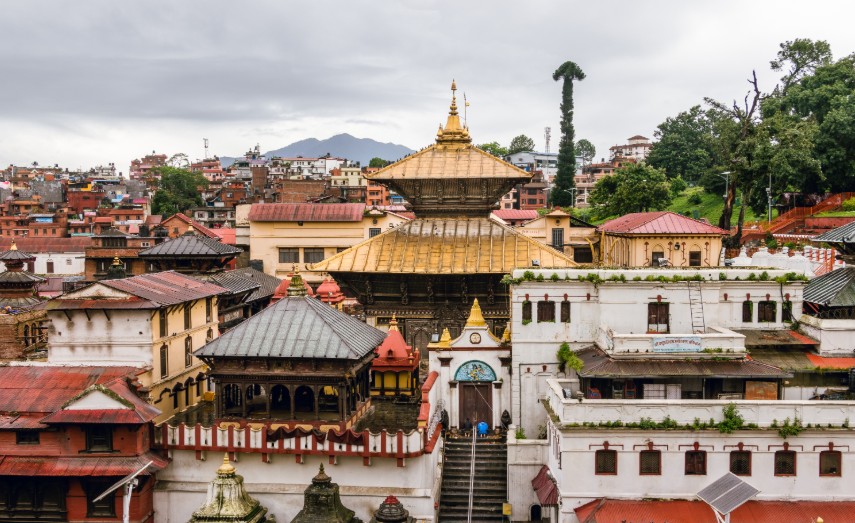
The annual Pashupatinath Fair, observed on Margashirsha Krishna Trayodashi to pray for the peace of departed ancestors, begins today.
From early morning, devotees gather at the Pashupatinath area to light lamps in memory of their ancestors. On the evening of Trayodashi, devotees perform deepdaan rituals, while on the morning of Chaturdashi they scatter Satabeej (sacred seeds) wishing for the liberation of departed souls. Those who offer Akhanda Deepdaan through the night scatter Satabeej at dawn the following day.
Large crowds are expected not only at the Pashupatinath Temple but also at Shiva temples across the country. On the eve of Balachaturdashi, thousands of devotees stay awake through the night offering lamps and participating in hymns, rituals, and cultural performances. On Wednesday morning, they scatter Satabeej to mark Balachaturdashi.
Devotees from across Nepal visit Pashupatinath each year on Margashirsha Krishna Chaturdashi. As early as Tuesday morning, crowds begin forming around the temple to secure space for lighting lamps. The Pashupati Area Development Trust has arranged tents and shelters due to the winter cold.
To honor their departed loved ones, devotees scatter seeds across major sacred locations such as the 108 Shivalingas, Kailash, Suryaghat, Gaurighat, Aryaghat, Guhyeshwari, Pashupati, Mrigasthali, Vishwarupa, and Kiranteshwar.
Although traditionally known as Satabeej, devotees now scatter Saptabeej—rice, barley, sesame, wheat, chickpea, maize, and millet. At Mrigasthali, near Bahira Ganesh, devotees shake the stone idol and loudly call out so that the message reaches their departed ancestors.
According to religious scholar Prof. Toyaraj Nepal, classical texts such as Hemadri state that Satabeej originally meant offering one hundred grains of rice. He explains that scattering even a single grain today grants merit equal to donating a grain of gold, and brings spiritual benefits for both the living and the departed.
A legend says that Goddess Parvati scattered various seeds in Mrigasthali to identify Lord Shiva, who had taken the form of a deer. When the seeds sprouted and turned green, the deer returned and Parvati could finally recognize Shiva.
Another tale related to Balachaturdashi tells of a man named Balananda, who lived near the Pashupati cremation grounds. While eating his meal one day, the skull of a burning corpse burst, and some of its brain matter fell into his beaten rice. Finding it unexpectedly tasty, he developed a habit of eating it—giving rise to the unusual folklore associated with the festival.
About the Author