
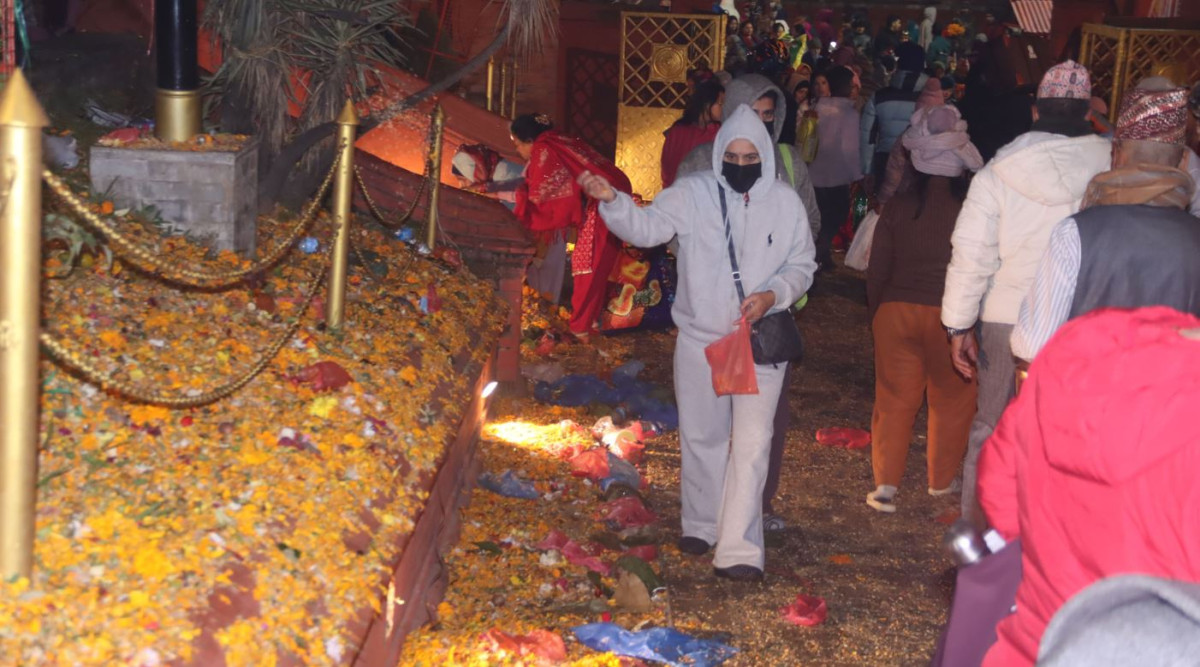
The Balachaturdashi festival is being observed this morning with the traditional ritual of scattering Shatbeej (seven sacred seeds). The festival is celebrated every year on the morning of Margashirsha Krishna Chaturdashi.
Devotees scatter Shatbeej in the premises of the Pashupatinath temple and other Shiva shrines across the country, believing that it helps liberate the souls of departed ancestors. On the night of Margashirsha Krishna Trayodashi, devotees perform deepdan (lighting lamps) and stay awake with bhajans and prayers. At dawn on Chaturdashi, they offer Shatbeej in remembrance of their late ancestors.
Large crowds gather at Pashupatinath and other Shiva temples from the previous day for this ritual. The tradition includes staying awake all night, singing hymns, lighting lamps, and then scattering seeds the next morning.
Shatbeej typically includes seven types of grains—rice, wheat, black lentils, green gram, millet, and barley. In some places, fruits like lemon, lime, orange, apple, sugarcane, and guava, along with sesame, chickpeas, and maize, are also included.
After a ritual bath in the morning, devotees select forests and sacred areas near Shiva temples to scatter the Shatbeej. In Kathmandu, devotees gather around Pashupatinath and nearby sites such as Kiranteshwar Mahadev, Gaurighat, Guhyeshwari, Aryaghat, Shleshmantak forest, and other religious sites like Chatara, Barahakshetra, Seti Beni Dham, and Devghat for the ritual.
About the Author