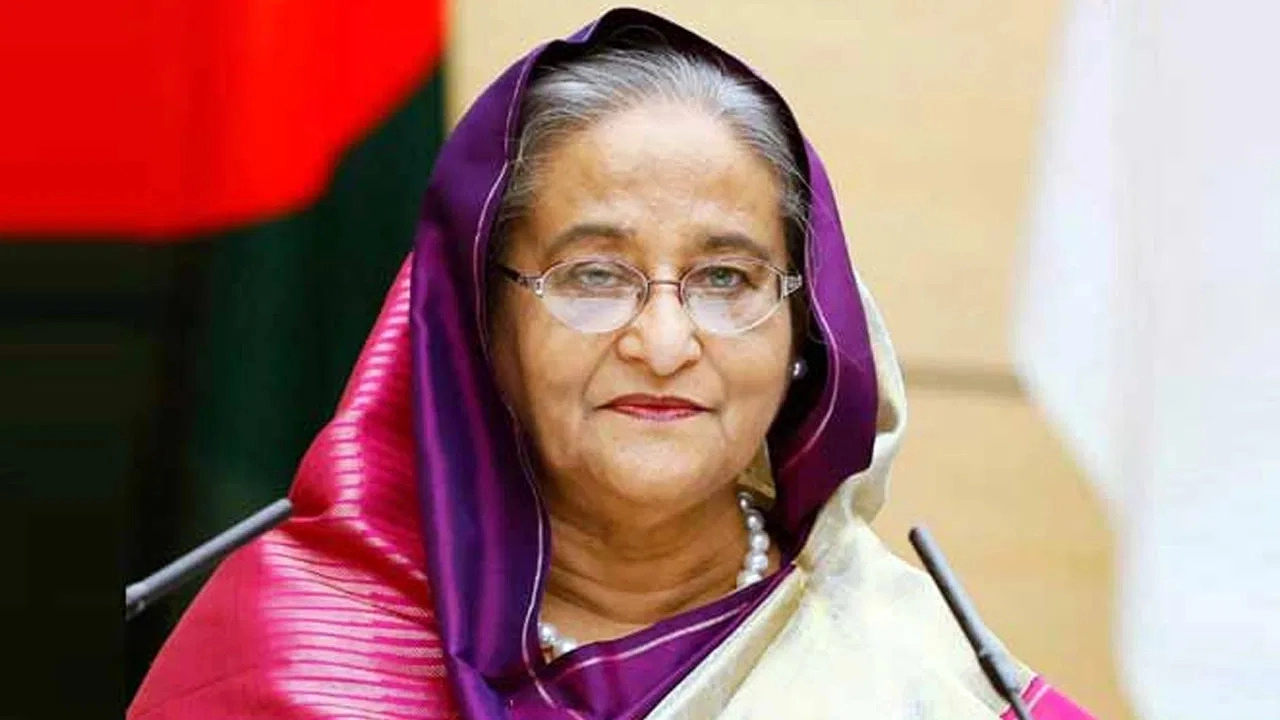
A special court in Bangladesh has sentenced ousted former Prime Minister Sheikh Hasina to death, ruling that she committed “crimes against humanity” during the student uprising of July–August 2024.
According to local media reports, the International Crimes Tribunal-1 (ICT-1) delivered the historic verdict on Monday afternoon, finding Hasina and three top political and security officials guilty.
As reported by the Dhaka Tribune, the tribunal found Hasina guilty on all five charges of crimes against humanity, concluding that her orders, incitement, and failure to control the situation fueled nationwide violence. The court ruled that Hasina, former police chief Chowdhury Abdullah Al-Mamun, and former Home Minister Asaduzzaman Khan Kamal planned and enabled atrocities to suppress the student movement.
The 78-year-old Hasina is currently living in exile in India. The case was conducted in absentia since both Hasina and Asaduzzaman have been declared fugitives.
Quoting the court, Al Jazeera reported:
“Accused Sheikh Hasina committed crimes against humanity through her provocative orders and failed to take preventive or punitive measures under Charge No. 1.”
The tribunal further stated:
“Under Charge No. 2, she ordered the use of drones, helicopters, and lethal weapons, which escalated the crimes against humanity.”
The verdict was broadcast live by Bangladesh Television. The three-member bench was chaired by Chief Justice Ghulam Murtaza, with Justices Mohammad Sofiul Alam Mahmud and Mohammad Mohitul Haque Enam Chowdhury as members.
Former police chief Mamun, the only accused held in custody, was brought to court on Monday morning. He had already been found guilty earlier and had turned state witness. High-level security measures were deployed around the court premises, and families of victims were present demanding severe punishment.
ICT-1 found the accused guilty on five charges, including:
- Mass killings of protesters in Dhaka
- Use of drones and helicopters to fire on crowds
- The murder of student activist Abu Sayed
- Burning bodies in Ashulia to destroy evidence
- Coordinated killings of students in Chankharpul
The case file consists of 8,747 pages, including references, seized materials, and detailed victim accounts.
Prosecutors said Hasina incited the violence through a press conference at Gono Bhaban on July 14, 2024, after which law enforcement and ruling party cadres launched systematic attacks on students. The tribunal concluded that Hasina, Kamal, and Mamun incited, directed, or failed to stop the attacks that led to killings, attempted murders, and torture.
On August 5, 2024, six students were killed when police opened fire in the Chankharpul area of Dhaka. The court held the top leadership directly responsible. That same day, six others were shot in Ashulia, where five bodies were burned and one victim allegedly burned alive.
Defense lawyer Mohammad Amir Hussain argued that all charges were fabricated, claiming there was no evidence that Hasina ordered any killings. He alleged that the violence was caused by “another group.”
Hasina has been living in New Delhi since fleeing Bangladesh in August 2024 and has consistently denied all accusations from exile.
About the Author