
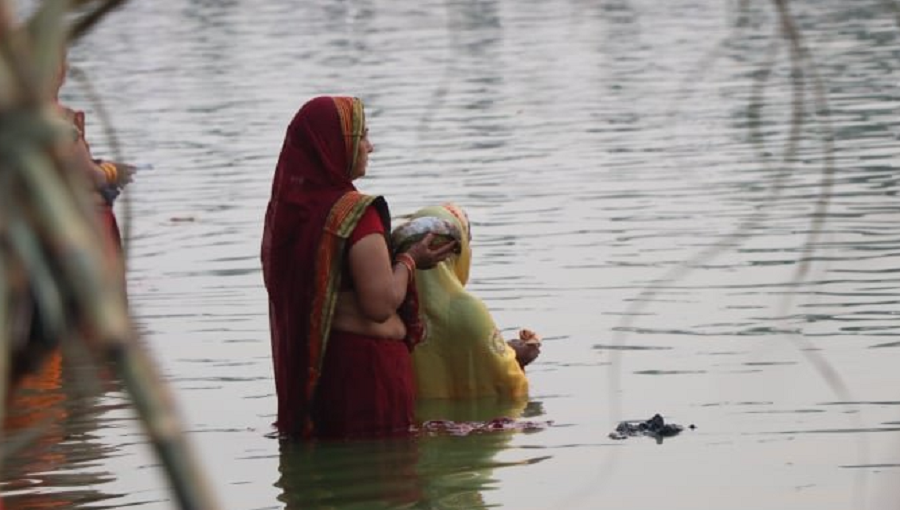
The sacred festival of Chaiti Chhath is being celebrated today (Tuesday evening) across the Mithila region, including Mahottari, with great faith and devotion by offering prayers to the setting sun.
🌅 Main Ritual – Offering to the Setting Sun
On the main day (Shashthi Tithi), devotees stand in rivers, ponds, and other water bodies and offer arghya (holy offerings) to the setting sun. They worship Surya Dev while applying sacred vermilion and rice on their palms, offering flowers and various ritual items until sunset.
🪔 Ritual Offerings and Traditions
Families prepare traditional sweets and offerings made from wheat and rice flour such as:
- Thekuwa
- Bhuswa
- Khajuriya
- Perukiya
Along with fruits and items like radish, carrots, turmeric, coconut, oranges, and bananas, these are placed in bamboo baskets and clay containers. Devotees then proceed together, singing devotional and folk songs, to nearby Chhath ghats (riverbanks or ponds).
🗓️ Four-Day Festival Overview
The four-day Chaiti Chhath festival began on Sunday (Chaturthi) and is observed with strict rituals:
- Day 1 – Naha Kha: Ritual bathing and purification
- Day 2 – Kharna: Day-long fast followed by evening पूजा and simple भोजन
- Day 3 – Shashthi (Today): Main पूजा with offering to the setting sun 🌇
- Day 4 – Saptami (Tomorrow): Final offering to the rising sun 🌄
Tomorrow morning, devotees will again gather at water bodies to offer prayers to the rising sun, marking the conclusion of the festival.
📍 Celebration Across Mithila
The festival is being celebrated in various towns and villages of Mahottari district such as:
- Jaleshwar
- Matihani
- Bardibas
- Gaushala
- Loharpatti
- Ramgopalpur
Devotees gather at rivers like Bighi, Rato Maraha, Jangaha, and Ankusi, as well as ponds and canals across the region.
🙏 Cultural and Religious Significance
Chhath is a unique festival where both the setting and rising sun are worshipped, symbolizing gratitude, discipline, and harmony with nature. It promotes values of truth, non-violence, and compassion toward all living beings.
According to Mahabharata, the Pandavas, along with Draupadi, worshipped the Sun God during their exile in the Mithila region. Another belief from the Surya Purana states that Goddess Anusuya first observed the Chhath fast, leading to its tradition.
🤝 A Festival of Unity
Though rooted in Hindu tradition, Chhath has grown into a symbol of social harmony, celebrated by people of different communities, including Muslims. Large crowds gather at riverbanks not only to worship but also to witness the rituals and seek blessings.
🌼 Purpose of the Festival
Devotees observe this fast for:
- Family happiness and peace
- Prosperity and well-being
- Good health and relief from illness
- Fulfillment of wishes
About the Author