??? ?????? ? ??? ?????? ?? ?????? ???? ?????????? ???????? ??????? ??????????? ??? ?? ? ?? ????? ???? ??????? ??????? ?? ??? ? ??????? ??????????? ?????÷????
The Chhath festival officially began in Mithila on Saturday. Considered the biggest festival of the Mithila region, preparations are underway to build and decorate ghats along rivers and ponds for the celebrations.
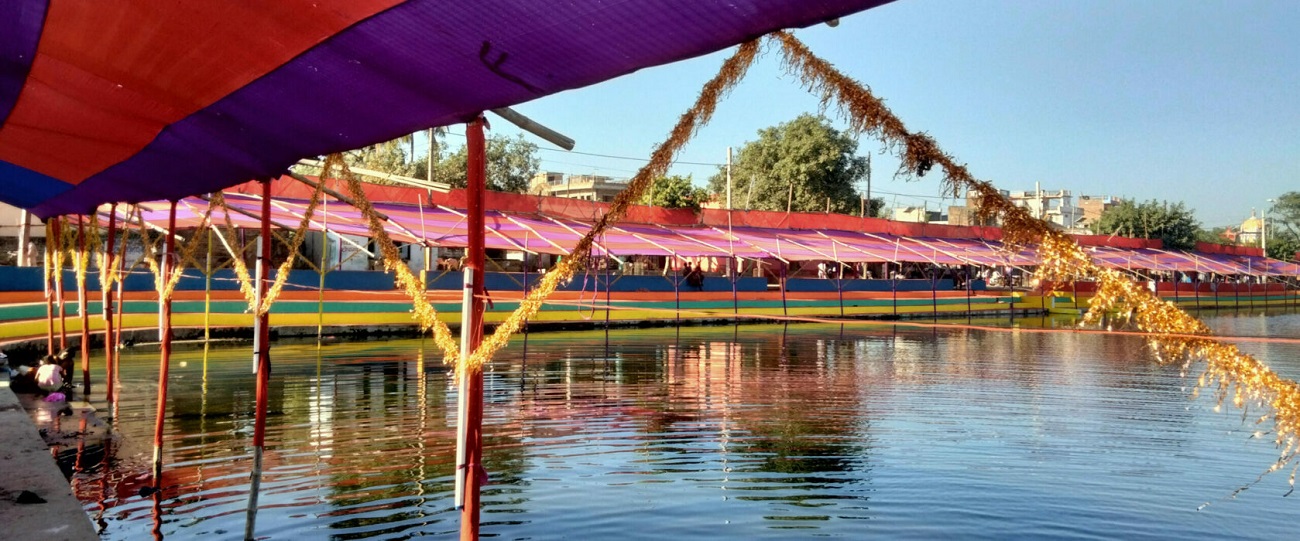
Hari Narayan Gupta, Chairman of the Ganga Sagar Chhath Committee in Janakpurdham, said that similar to previous years, half of the Ganga Sagar area has been beautifully decorated. He claimed that arrangements at the ghats—ranging from cleanliness to decoration—are better than in previous years.
At the Ganga Sagar ghat, construction of the pavilion has reached the final stage, while decorative lighting is yet to be completed. Three committees are involved in the decoration work at Ganga Sagar.
Similarly, Birendra Karna, Secretary of the committee building the Chhath ghat at Argaja Sar in Janakpur, said that preparations began right after Dashain. He informed that cleaning and decoration work is currently ongoing. Not only Hindus but also people from the Muslim community participate in Chhath rituals at this pond.
Security coordination has been made with the police to ensure peace and safety. More than 5,000 devotees are expected to offer Arghya at Argaja Sar pond. Festivals celebrated in the Mithila region are entirely based on domestic production. Items used in Chhath rituals are traditionally prepared from flour made from homegrown wheat and rice.
Markets are now becoming crowded with people buying items required for Chhath. In the markets of Janakpurdham, bamboo and clay products are being sold everywhere.
Since items made from bamboo and clay are considered pure for the festival, their demand has surged. Residents of Mithila are busy buying clay pots, elephants made of clay, bamboo baskets (chitthi), nanglo, and kansupati.
The four-day-long Chhath festival officially begins on Saturday. Devotees observe a strict fast, remaining without food and water for two days. The first day, Saturday, is known as Nahay–Khay. On the second day, Sunday, devotees observe a full-day fast and in the evening prepare rice pudding (kheer) to offer to the deities. This ritual is known as Kharna.
On the main day, Monday, offerings such as thekuwa, bhuswa, and other delicacies made from agricultural flour are arranged along with banana offerings, clay elephant idols, sup, kansupati, and water-filled clay pots in a pure and sacred manner. In the evening, devotees offer Arghya to the setting sun.
On the final day of Chhath, Tuesday morning, the festival concludes with the offering of Arghya to the rising sun.
About the Author