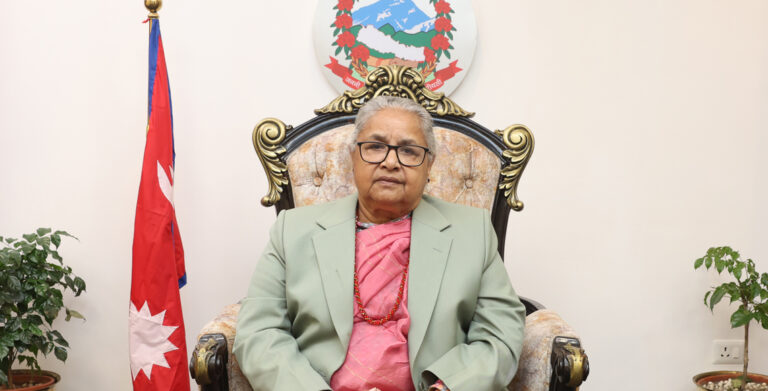
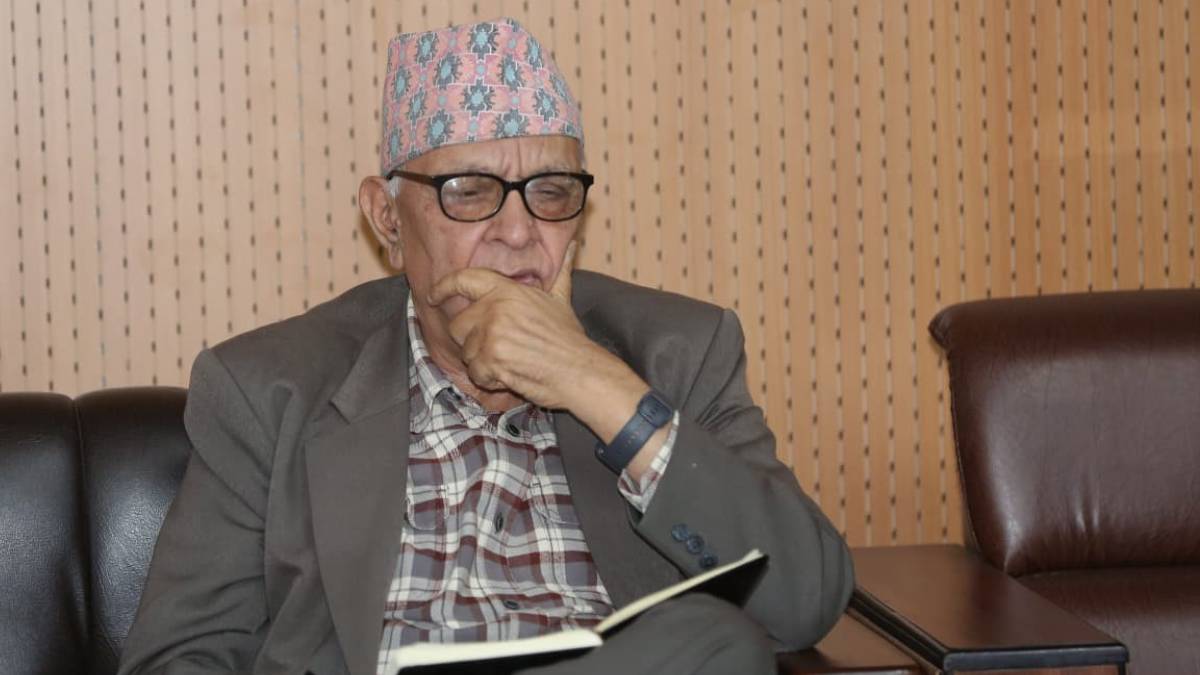
Former Finance Minister Dr. Prakash Chandra Lohani has said that Nepal’s economy cannot become strong as long as the country’s political sector remains weak. He made these remarks during a discussion program on the current state of Nepal’s economy.
Dr. Lohani said it is worrying that the government complains of not having enough funds, yet even the available resources are not being utilized effectively.
Expressing deep concern over the lack of investment despite reductions in bank interest rates, he said, “The interest rate has already come down to a single digit. Yet people still complain that it is high. Investors are not being attracted.”
He added that although Nepal’s economic model heavily depends on remittance, the country has not been able to make proper use of it. According to him, the biggest challenge today is how to maximize the use of government funds.
“It is said that the Nepal government has no money, but even the money available is not being spent. We are making cuts saying there is no money. That is necessary, but even what we have is not being used,” he said.
“To encourage the private sector, lowering interest rates is the biggest step. Around the world, even a small change in interest rates affects private investment. Our interest rate is already in single digits, but people still say it’s high. Funds are not being used. It’s a paradox—both having resources and not having them. This situation did not arise overnight. Our economic model is based on remittance, but we couldn’t use it properly. We didn’t invest it in exports, and now we are in this state. The challenge is how to use the government’s money.”
Dr. Lohani questioned whether Nepal has fallen into a “liquidity trap,” saying that even if interest rates decrease, investors remain uninterested mainly because of the political environment.
“No matter how much interest rates are reduced, people still don’t come? It is politics that creates that environment. When the political sphere weakens, the economy alone cannot function,” he emphasized.
He further said that Nepal’s current condition is in itself a critical crisis. Stating that the Nepal Rastra Bank still enjoys significant public trust and is one of the least politicized institutions, he stressed that the central bank must maintain its autonomy and play a crucial role in steering the economy in the right direction.
About the Author