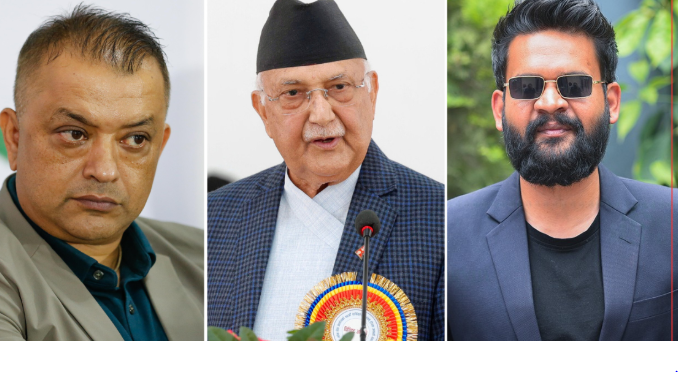
With a large voter base and a total of 60 constituencies, Koshi and Madhesh provinces have emerged as decisive centers in this year’s House of Representatives election. The national focus has further intensified as three prime ministerial contenders are contesting elections from these two provinces.
In Koshi Province, a high-profile contest is underway in Jhapa–5 between CPN-UML Chair KP Sharma Oli and senior Rastriya Swatantra Party leader Balen Shah. Balen’s challenge in what has traditionally been Oli’s stronghold has put the UML chair under visible pressure. Political analysts say the influence of Gen Z voters and a growing demand for change have turned Jhapa–5 into an “election epicenter.”
Similarly, political momentum has picked up in Madhesh Province after Nepali Congress President Gagan Thapa filed his candidacy from Sarlahi–4. Considering Madhesh voters as decisive, major political parties have adopted aggressive campaign strategies in the region.
Along with Gagan Thapa, the presence of top leaders such as Upendra Yadav, Madhav Kumar Nepal, Narayan Kaji Shrestha, Amaresh Singh, and CK Raut has transformed Madhesh into a hub of multi-centered political competition.
According to political analysts, following the Gen Z movement, no constituency can be considered a safe stronghold anymore. Due to voter composition, youth appeal, and the symbolic presence of key leaders, Koshi and Madhesh are likely to determine the overall direction and outcome of this election.
About the Author