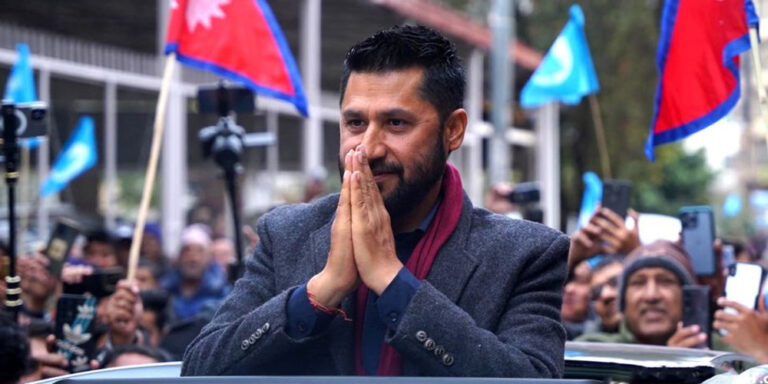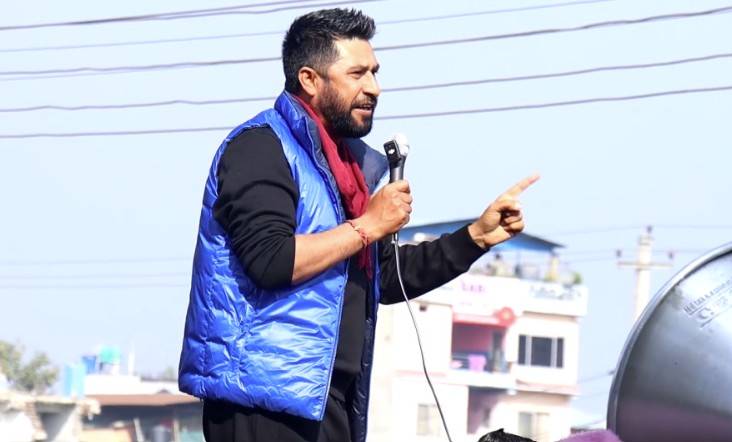
Former Minister for Energy, Water Resources and Irrigation, Physical Infrastructure and Transport, and Urban Development, Kulman Ghising, has clarified that his resignation was not an act of running away or avoiding responsibility, but a continuation of self-respect, moral values, and commitment to the people.
Addressing a press conference after stepping down from office, Ghising, who served for 115 days in the government formed after the Gen Z movement, said that self-respect stands above position and the people stand above the government. He stated that his decision to resign was guided by principles, ethics, and accountability to citizens, emphasizing that true duty lies in standing with the country and its people both in and out of office.
Ghising said he became a minister at the request of the Prime Minister and in line with the aspirations of the Gen Z movement, expressing gratitude to the Prime Minister who trusted him and to the youth who stood for change. He also clarified that despite an understanding between Ujyaalo Nepal Party and the Rastriya Swatantra Party, he has not taken formal membership of any political party so far.
Rejecting allegations that he tried to exert pressure to appoint “his own people” after resigning, Ghising termed such claims as deliberate misinformation. Referring to Nepal’s political history, where leaders have contested elections while remaining in office during interim and election governments, he urged that his decision should not be viewed as unusual.
Despite his short tenure, Ghising claimed that a strong foundation for policy reform had been laid. He highlighted the expansion of irrigation facilities covering 22,500 hectares of land in Sarlahi and Rautahat through 500 deep tube wells, preparations to ensure farmers’ investment in projects including Rani Jamara Kulariya, the creation of an environment for importing and exporting an additional 5,000 megawatts of electricity through Nepal–India cross-border transmission lines, and progress toward expanding electricity exports to Bangladesh.
He also mentioned that long-stalled and problematic contracts were terminated and reconstruction processes initiated, while projects such as Sunkoshi–Marin, Kankai Bridge, Hulaki Highway, and Kamala Bridge gained momentum. Ghising further noted progress in waste management at Bancharedanda, resumption of Melamchi water supply, and the reopening of Kodari border point and BP Highway.
On disaster management, Ghising said the state’s role during monsoon-induced disasters was not limited to paperwork, claiming that timely information, preparedness, and intervention helped avert major losses.
Concluding his remarks, Ghising declared that even outside government, he would not deviate from the path of national interest, public welfare, and truth, and announced that he would actively continue his political journey toward building a prosperous and enlightened Nepal.
About the Author