Minister for Physical Infrastructure and Transport, Urban Development, and Energy, Water Resources, and Irrigation, Kulman Ghising, has stated that some stalled or “sick” contracts in Nepal are due to employee-related issues as well as contractors.
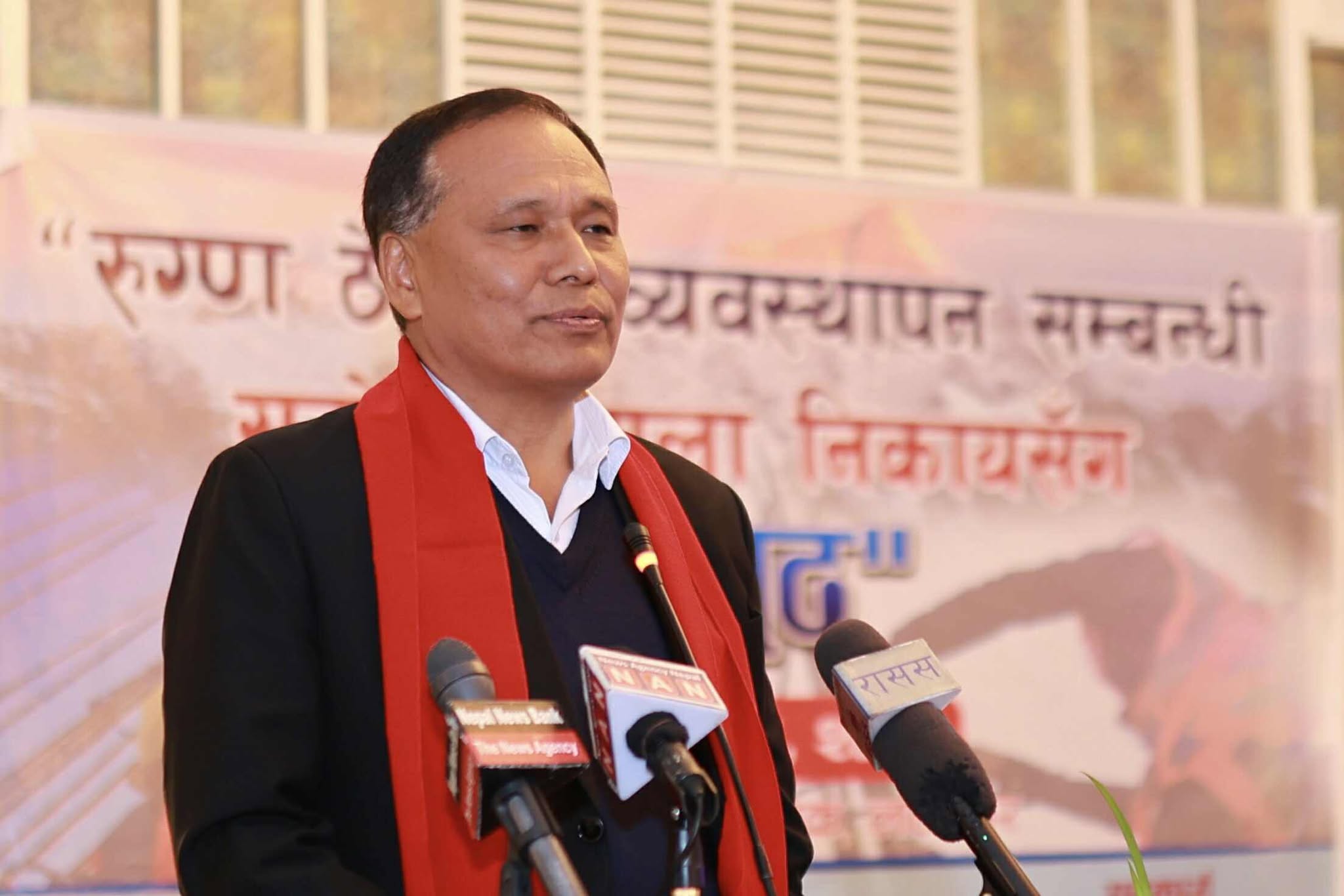
Speaking at a stakeholder dialogue on “Management of Sick Contracts” organized by the Nepal Infrastructure Journalists Society in Kathmandu on Tuesday, Minister Ghising emphasized the need to hold employees accountable.
“Many contracts have become sick due to project-related issues. Action should be taken against them as well,” he said. “Currently, many contracts have been terminated or are being terminated. Some of these have become sick due to contractor-related issues, while others have stalled because of employees. These cases need to be investigated, and relevant employees should be held responsible.”
He noted that around 250 contracts have become sick due to contractor-related problems but emphasized that large-scale development in the country is impossible without capable contractors. “Without contractors, major projects are not feasible. Development cannot happen without them, whether national or international projects,” he said. However, he added that enhancing the capacity of Nepalese contractors is essential to meet international standards.
Minister Ghising suggested that instead of investment conferences, Nepal should focus on contractor capacity-building conferences to strengthen local expertise. He also highlighted the problem of long-term stalled contracts where contractors are not even available. “Some sick contracts have existed for 10–15 years because contractors cannot be found despite management directives,” he said.
He further stressed that delays in decision-making by project chiefs also contribute to contracts turning sick. “Proper decisions must be made on time. Delays by project chiefs have led to contracts becoming sick,” he said.
Ghising added that the Commission for the Investigation of Abuse of Authority has recommended action against employees who fail to make timely decisions. He also noted weaknesses in Nepal’s construction planning, citing the Bheri Babai Diversion Irrigation Project, where the tunnel breakthrough occurred in 2018, but contracts for the powerhouse and other structures had not yet been issued.
He pointed out additional obstacles in Nepal, noting that a contractor from China could complete a project in six months, while in Nepal the same project might take six years due to poor coordination between contractors, consultants, and projects.
Finally, he said the government is taking steps to remove the requirement for contractors to recover remaining work after contract termination and will support capable contractors in completing projects efficiently.
About the Author