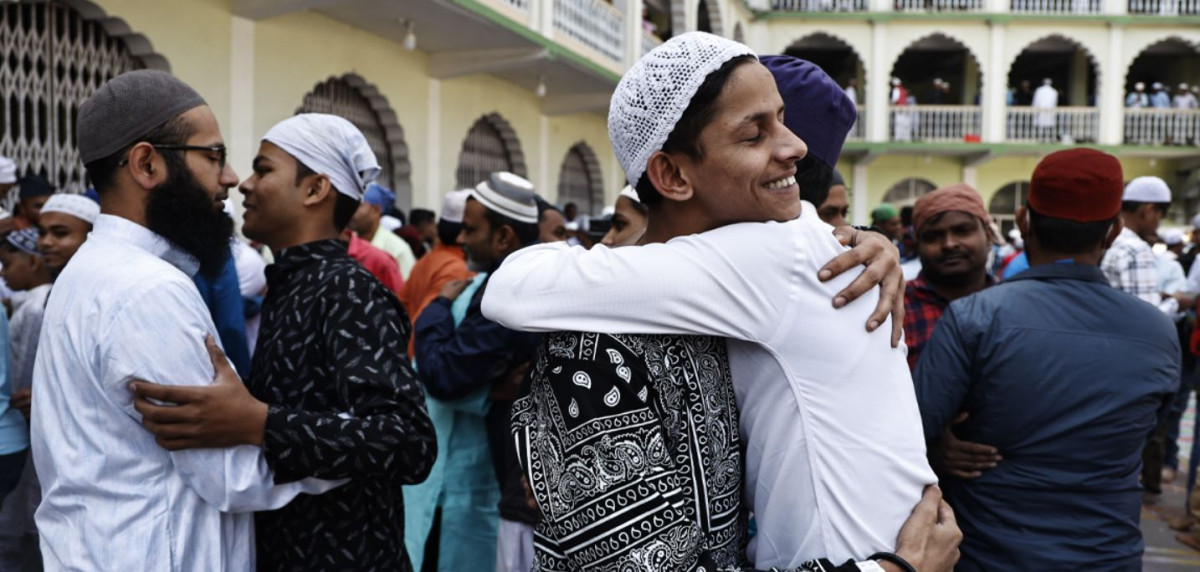
The Muslim community is celebrating Eid al-Fitr today with great joy and धार्मिक devotion. The festival marks the end of the holy month of fasting (Ramadan) observed according to the Hijri calendar.
On this occasion, devotees offer special prayers (Namaz) and seek blessings from elders. After the main prayer, it is customary to visit relatives and elders for the next three days to receive blessings, while younger members are given blessings in return. Guests are traditionally served sweets such as sewai and dates.
The festival is also known for its spirit of charity and sharing, as people donate to the poor and needy. According to Muslim religious teachings, giving charity is an important part of Eid celebrations.
As informed by Abdul Sattar, the celebration of Eid is determined after sighting the moon at the end of the ninth month of the Islamic calendar.
Special prayers are being offered this morning at the Nepali Jame Masjid and Kashmiri Masjid, as well as in mosques and Eidgahs across the country.
A key aspect of the festival is Zakat, where Muslims donate 2.5% of their annual savings to the poor, as prescribed in the Quran. Similarly, Fitr (Sadaqat al-Fitr) is also given, where individuals donate wheat or its equivalent in cash—even on behalf of unborn children—to help those in need.
After a month-long fast from sunrise to sunset, the festival brings people together in celebration, with families wearing new clothes and exchanging Eid greetings with friends and relatives.
About the Author