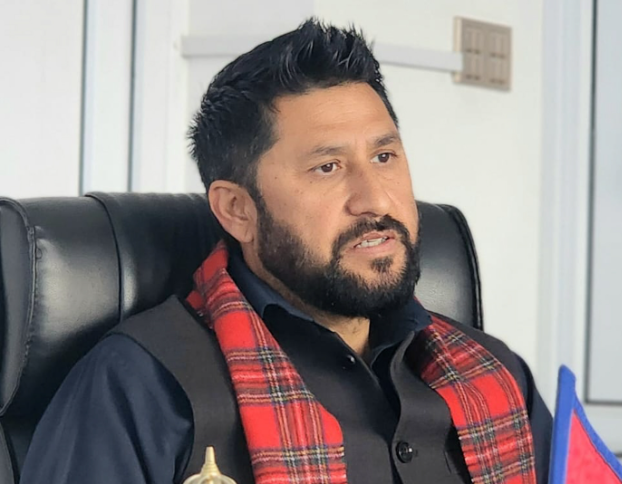
Nepali Congress leader Pradeep Paudel has put forward a four-point proposal aimed at resolving the ongoing political crisis in the country.
In his proposal, Paudel emphasized the need for full commitment to democratic values and strengthening the rule of law. He also called for unity among all stakeholders to prevent the country from falling into a constitutional vacuum.
Writing on Facebook on Thursday, the former minister stated: “The events of Bhadra 23 and 24, 2082 (Nepali calendar) and the resulting adverse circumstances have thrown the entire country into uncertainty. To overcome this political vacuum, it is essential for all of us to remain fully committed to democratic values, strengthen the rule of law, and prevent the country from drifting into constitutional void.”
Paudel highlighted that the nation is at a historic moment to chart a path toward national unity, peace, stability, and prosperity. He stressed that patience, dialogue, and unity are critical to returning the country to a path of peace and progress.
He added, “This is the time for all of us to transform the current crisis into an opportunity for national revival. I earnestly request the honorable President, all Gen Z youth, political parties, and civil society to find solutions within the constitution and rule of law, in line with the sentiments of the youth, to ensure the democratic journey of Nepal.”
Paudel also welcomed the dialogue initiative started by President Ramchandra Paudel and urged all parties to seek resolution through discussion. He called on citizens, media, and all relevant stakeholders to support the security agencies’ efforts in restoring peace.
To provide an immediate solution, Paudel proposed that the Nepali Congress convene a meeting to decide on forming an interim government and initiating constitutional amendments.
His constitutional reform proposals include restructuring the state and removing unnecessary provisions—for example:
- Creating a House of Representatives with 105 directly elected members under a proportional representation system.
- Halving the number of provincial assembly members.
- Reducing local-level bodies by 50%.
- Limiting the federal council of ministers to 15 members and provincial cabinets to a maximum of 5 ministers.
He also urged the party to convene an immediate central committee meeting, either virtually or physically, to discuss the formation of a national government and publicly share the party’s stance on resolving the current national crisis.
About the Author