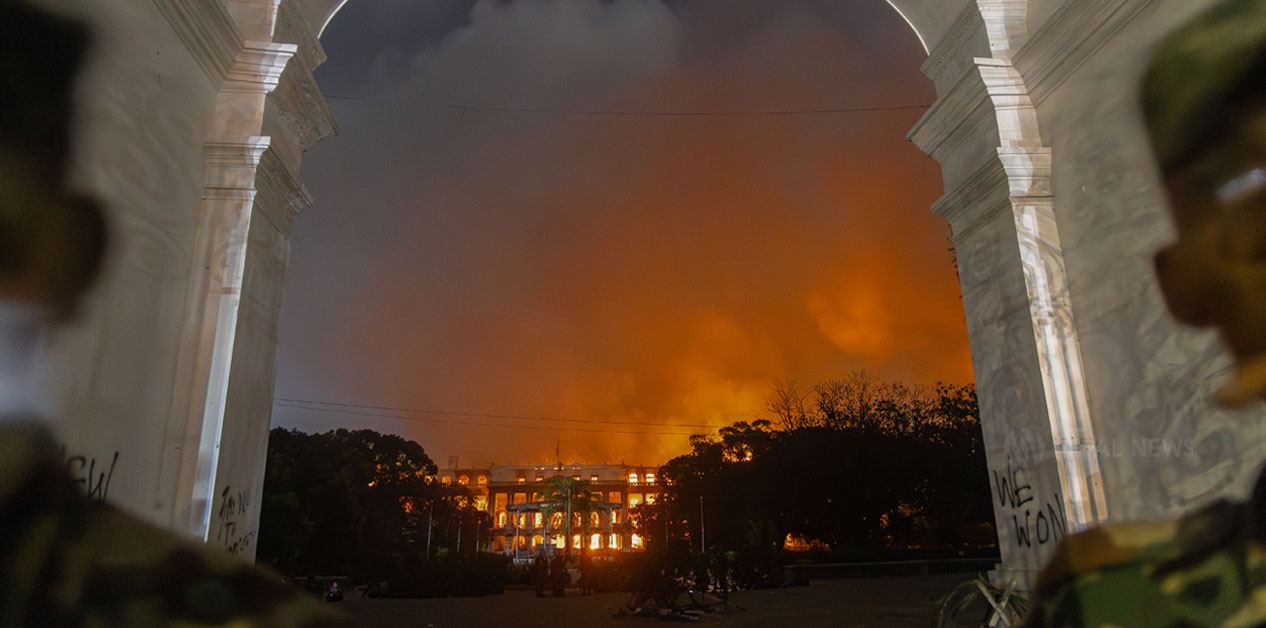
Today marks one hundred days since the Gen-Z movement erupted in Nepal. The protests held on Bhadra 23 and 24 not only displaced the Congress–UML coalition government led by then Prime Minister KP Sharma Oli, but also led to the formation of an interim government under former Chief Justice Sushila Karki. The movement sidelined major political parties and dramatically altered the country’s political landscape. However, despite this upheaval, there has been no substantial change in the day-to-day condition of the country over the past hundred days, leaving the interim government facing a serious challenge to deliver real transformation.
In the aftermath of the Gen-Z movement, young leaders have become more visible in politics and the media than traditional party figures. One of them, Vinita Bogati, has been in her home district of Surkhet for the past week. From her interactions with local residents, she feels people are hopeful that the country’s condition will finally improve. “Young people sacrificed their lives,” she says, “and now ordinary citizens hope corruption will stop and leaders and officials will reform.”
Believing that change will not come by waiting for old leaders, Vinita is preparing to contest the upcoming election from Surkhet constituency number 2. She says her generation is no longer content with just hoping for change but is determined to bring it about, arguing that while the Gen-Z movement has changed the political scene, the people’s lives remain the same.
The government has announced preparations to hold House of Representatives elections on Falgun 21, and the Election Commission has begun its work. Following the election announcement, many Gen-Z leaders have started preparing to contest, and new political parties have already been formed under their initiative. This marks another shift brought about by the movement.
Another Gen-Z leader, Raksha Bam, who has been interacting with youths and citizens across Kathmandu and various provinces since the protests, shares similar experiences. She says people widely understand why young people revolted and often ask whether favoritism and nepotism in government offices will finally end. According to her, citizens are hopeful and should not be allowed to fall into disappointment.
While the movement has inspired hope among youths and the general public, long-dominant political parties have expressed dissatisfaction, claiming state institutions were weakened and social disorder increased. At the same time, the Gen-Z movement has forced even established parties to confront internal challenges. In the UML, party chair KP Sharma Oli, who once easily controlled dissent, is now facing internal competition at the 11th general convention. Similarly, in the Nepali Congress, pressure from younger generations has pushed the party toward holding its general convention within a fixed timeline.
Former Maoist Centre chair Pushpa Kamal Dahal ‘Prachanda’ stepped down as chair soon after the movement and later dissolved his party identity altogether, forming a new Nepali Communist Party along with several other leftist groups. Across the political spectrum, new parties have emerged under the leadership of figures such as Kulman Ghising, Harka Sampang, Birendra Bahadur Basnet, and Durga Prasai, reflecting a shift driven more by public expectations than traditional ideology.
The movement also paved the way for Nepal’s first female executive head, a development many believe would have taken much longer without the Gen-Z uprising. The interim government includes figures widely seen as capable and credible, further fueling optimism. However, divisions have begun to surface among Gen-Z leaders themselves, particularly over issues such as constitutional amendment and the possible restoration of parliament.
Some Gen-Z leaders argue that restoring parliament and returning old parties to power would undermine the very purpose of the movement. Vinita Bogati insists that elections must be held on Falgun 21 under the existing constitution and that only a new leadership emerging from the polls can bring change. Others warn of attempts to criminalize the movement and question the legitimacy of the interim government amid ongoing controversies.
Nepal’s political history since the promulgation of the 2015 constitution has seen federalism take root, local governments established, and democratic republicanism consolidated. Yet public expectations for good governance, development, and effective service delivery have largely turned into frustration due to repeated power-sharing deals among major parties and excessive politicization of state institutions. Analysts argue that this environment ultimately fueled the Gen-Z rebellion.
The movement also resulted in a ten-point agreement between the government and Gen-Z leaders on Mangsir 24, addressing issues ranging from institutionalizing the movement to investigating corruption. While the agreement recognizes the sacrifices made, it has also raised concerns about accountability for violent acts committed during the protests.
With unemployment still driving young people abroad and public trust hanging in the balance, observers say the interim government must prioritize implementing the agreement, delivering tangible results quickly, and holding elections on time. As anthropologist Suresh Dhakal warns, failure to do so could turn the current hope inspired by the Gen-Z movement into deep disappointment.
About the Author