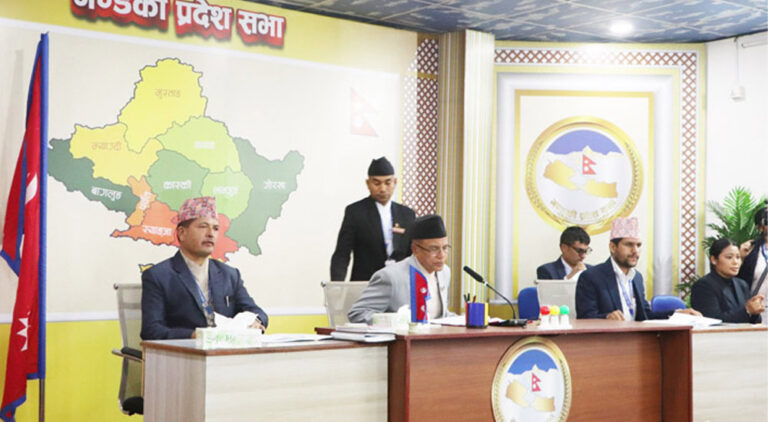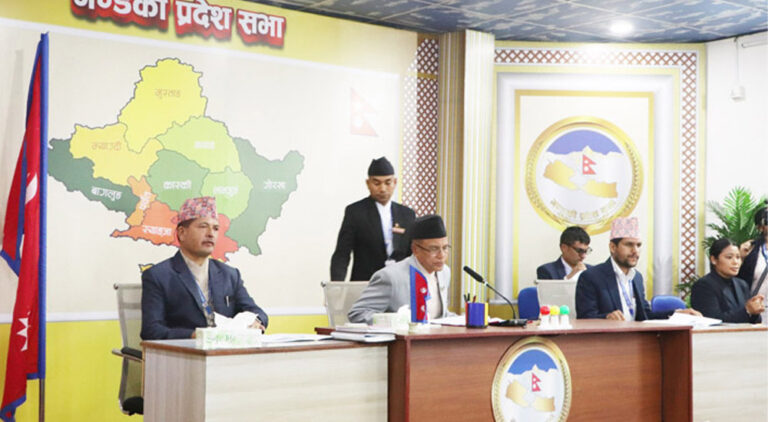

As Nepal approaches a decade since the implementation of federalism, provincial governments are still struggling to establish political identity and remain heavily dependent on the central government for 80–90% of their financial needs.
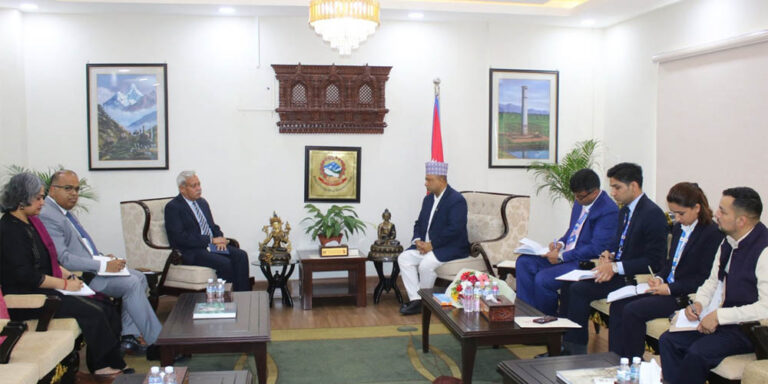
A governance roadmap report prepared by a committee led by Prime Minister’s Office Secretary Govinda Bahadur Karki has outlined key reforms to strengthen provincial governments. The 13-member committee submitted its report to the government on March 16, 2026 (Chaitra 3, 2082 B.S.), following challenges observed in governance and public service delivery after the so-called “Gen Z protests” in late 2025.
The report identifies the federal government’s centralized mindset as the main obstacle to effective provincial governance. It notes that structural rigidity and lack of decentralization have weakened provincial performance.
One major issue highlighted is the severe shortage of staff at the provincial level. Due to the absence of umbrella legislation such as a federal civil service law, provinces face administrative paralysis, with around 40% of positions vacant. Frequent staff transfers and unclear career progression have further worsened the situation.
Financial dependency is another critical concern. According to findings referenced from the Natural Resources and Fiscal Commission, provinces rely heavily on federal grants and transfers, with minimal internal revenue generation, limiting their financial autonomy.
To address inefficiencies, the report recommends reducing the number of ministries in each province to a maximum of seven. It also proposes eliminating unnecessary offices, boards, and committees, and adopting an integrated service delivery model at the district level.
In terms of administrative reform, the report suggests grouping provincial employees by sector to promote specialization and reduce frequent transfers, thereby improving institutional memory and efficiency.
Digital transformation is emphasized as a key tool for improving governance and reducing corruption. The roadmap proposes developing a unified provincial service portal, expanding digital services, and introducing paperless and faceless governance systems. Plans also include digital token systems and file tracking to speed up service delivery.
To tackle inefficient budget spending practices, the report calls for implementing a “project bank” system to ensure that development projects are selected based on proper cost-benefit analysis rather than arbitrary decisions. It also advocates for a results-based budgeting system.
The report further highlights a lack of trust and coordination among federal, provincial, and local governments. It recommends strengthening constitutional mechanisms such as coordination councils to improve cooperation and coexistence among the three tiers of government.
A clear implementation timeline has also been proposed:
- Within 3 months: Reduce provincial ministries to seven
- Within 6 months: Introduce a federal civil service law
- Within 1 year: Launch integrated digital service portals
- Within 3 years: Significantly reduce financial dependency on federal grants
The roadmap envisions building accountable, financially self-reliant, and efficient provincial governments through strong legal frameworks, digital governance, and better intergovernmental coordination.
However, its success will depend largely on whether the federal government can move away from its centralized approach and whether provincial governments demonstrate the political will to implement these reforms.
About the Author