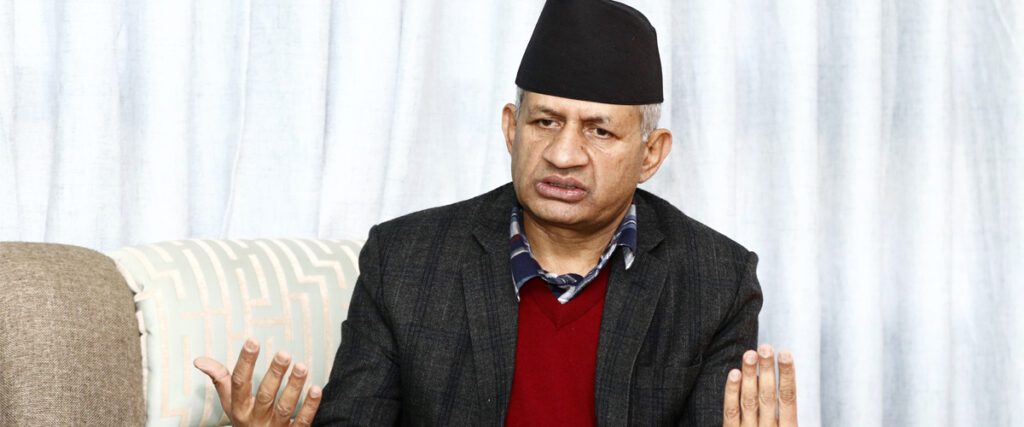
CPN–UML Deputy General Secretary Pradeep Gyawali has sharply criticized the ongoing “Unity Message Assemblies” being held by the Nepali Communist Party (NCP) across all seven provinces.
Through a detailed seven-point statement on social media, Gyawali questioned the ideological clarity, political accountability, and organizational direction of the NCP leadership.
Key Points Raised by Gyawali:
- Abandoning Maoism and the Maoist Brand:
Gyawali asked why the party removed Maoism as a guiding principle—despite claiming for two decades that it represented “the third dimension in the development of Marxism”—and why the party dropped the Maoist brand from its name without offering any explanation. - Unresolved Legacy of the People’s War:
He criticized the NCP leadership for failing to clarify why the enormous costs and legacy of the so-called People’s War have been left unaddressed. - Ideological Shifts Without Accountability:
Gyawali questioned what happened to the 23 ideological foundations presented during UML’s 8th General Convention to justify People’s Multiparty Democracy (Prachanda Path) as a guiding principle. He said the original authors have not provided any rational justification. - Lack of Direction and Framework:
He stated that the party has failed to explain its current “working direction, roadmap, and ideological framework.” - Contradictions Over MCC and Political Mergers:
He criticized leaders who previously wrote “notes of dissent” on issues like MCC but later played decisive roles in pushing party mergers. Gyawali questioned whose agenda they were following. - Uneven Accountability for Government Leadership:
Highlighting leadership durations since the establishment of the republic, he noted that NCP leaders collectively led the government for more than 4,184 days, yet now blame KP Sharma Oli—who led for 1,961 days—for the country’s problems. - Mockery of Internal Speech Campaigns:
Gyawali mocked the provincial assemblies for turning into “insult-filled speeches,” saying a “new pandit,” Rajendra Shrestha, has joined the trend by claiming UML’s membership has declined from 800,000 to 300,000—sarcastically suggesting Shrestha speaks as if he were a “computer operator from UML’s organization department.”
Gyawali’s remarks underscore intensifying tensions between UML and NCP at a time when both parties are trying to consolidate their political bases ahead of major upcoming political events.
About the Author