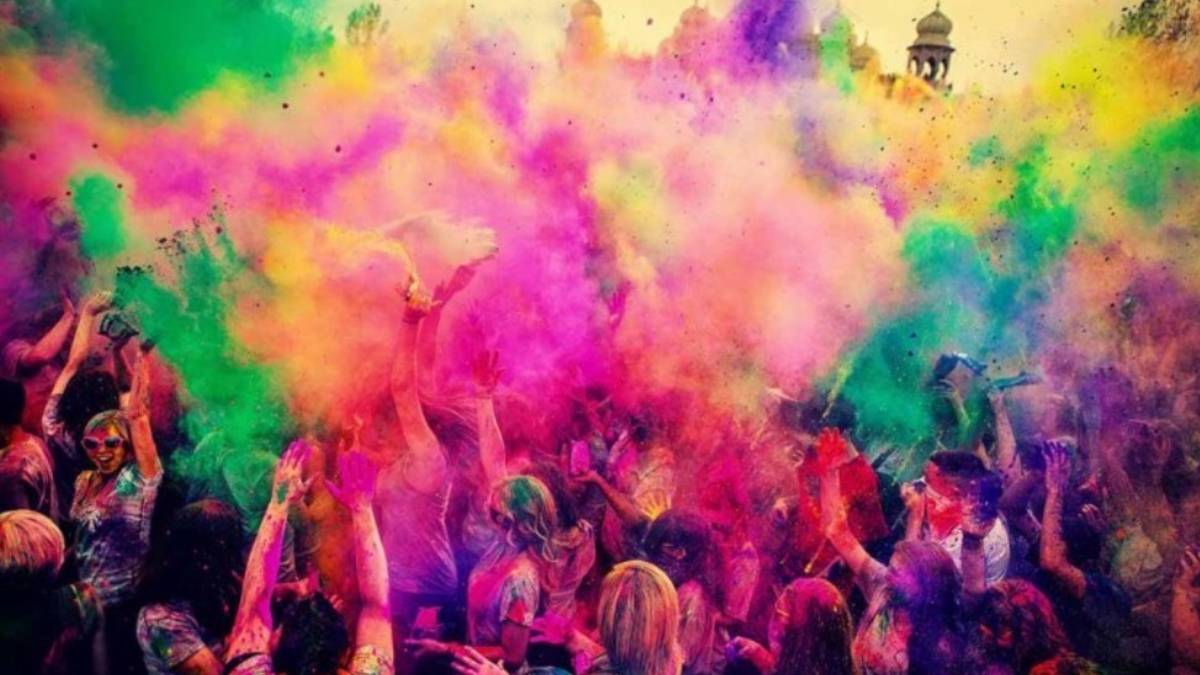
Fagu Purnima, popularly known as Holi, is being celebrated today with great enthusiasm in the hilly and Himalayan districts of Nepal by playing with colors and water balloons. The festival is observed every year on the full moon day of the bright fortnight of Falgun.
The festival, which marks the arrival of spring and spreads messages of harmony and goodwill, has been celebrated since ancient times. Until a few years ago, Holi in the Kathmandu Valley was often marked by unruly behavior, but due to active policing, it has become more civilized in recent years.
The practice of throwing colors and water balloons at passersby against their will has almost stopped. Even on the eve of the festival, the streets of the capital remained free from incidents such as splashing dirty water.
In the past, especially young women were targeted with water-filled balloons for days before Holi, creating an uncomfortable environment. However, this year, people have been able to move around freely even on the eve of the festival, said Rama KC, who came to work in the private sector in Putalisadak from Suryabinayak, Bhaktapur.
On this occasion, people gather at Basantapur in Kathmandu, where the ceremonial “Chir” (a decorated pole) erected earlier is brought down with rituals and musical processions and taken to Tundikhel for burning. It is believed that the flags attached to the Chir have medicinal value, and people scramble to collect them. The ashes of the burnt Chir are applied on the forehead as a blessing to ward off misfortune.
The Holi celebrations officially begin on Falgun Shukla Ashtami after worshiping the Chir installed in front of the Gaddi Baithak at Basantapur. On the night of Holi, there is also a tradition of symbolically offering rice and buffalo meat to a demon named “Gurumapa” and performing rituals at a water spout inside the Army Hospital premises.
The festival is associated with the mythological story from the Treta Yuga, where demon king Hiranyakashyapu ordered his sister Holika, who had a boon that fire could not harm her, to enter a blazing fire with his devotee son Prahlad. Holika was burned to ashes while Prahlad survived unharmed due to his devotion to Lord Vishnu. The burning of Holika symbolizes the victory of good over evil.
Another legend from the Dwapar Yuga relates to Lord Krishna, where the demoness Putana, sent by King Kansa to kill him, failed and was killed. Her burning is also linked to Holi celebrations in religious texts.
According to Prof. Toyaraj Nepal, a scholar of religious scriptures and former chairperson of the Nepal Panchang Nirnayak Development Committee, these legends form the religious basis of the festival.
Ayurvedic experts, including Dr. Banshdeep Sharma Kharel from the Ayurveda and Alternative Medicine Department, state that traditionally prepared natural colors and abir help prevent skin diseases and reduce winter-related ailments. The smoke from the burning Chir is also believed to eliminate harmful germs, giving the festival Ayurvedic significance.
The government has traditionally declared a public holiday on this occasion. In the Terai region, however, Holi is celebrated a day after the full moon. This year as well, Holi will be celebrated in the Terai on Tuesday, and the government has announced a public holiday for the region.
Although issues such as excessive alcohol consumption, fights, and the use of harmful chemical colors were once common, such negative practices have been gradually declining.
On this day, people often consume food items mixed with bhang, play with various colors, and celebrate with music and dance throughout the day. The Thakali community, in particular, wears colorful traditional attire and organizes archery competitions during the week-long festivities. Families gather, share delicious food, and enjoy the celebrations together.
Holi Celebrations Around the World
Holi or similar spring festivals are celebrated in Nepal, India, and several other countries in different forms.
- In Italy, a festival known as “Beliakonons” is said to involve sprinkling fragrant water and wearing colorful grass ornaments.
- In China, a 15-day celebration called “Chwej” includes wearing new clothes and jewelry.
- In the United States, a festival called “Hobo” features humorous costumes and competitions with prizes for winners.
- In Sri Lanka and Java (Indonesia), the festival includes fire worship.
- In Myanmar and Thailand, water worship is performed and offerings are made to Buddhist monks.
- In Japan and Sumatra (Indonesia), new harvests are welcomed with dance and music.
- In Yunnan (China), worship of Dionysus and dance celebrations are held.
- In Egypt, the festival is marked by humor, entertainment, and dancing.
Though celebrated under different names and traditions, the essence of the festival in many countries remains the same — promoting social harmony, goodwill, and unity.
About the Author