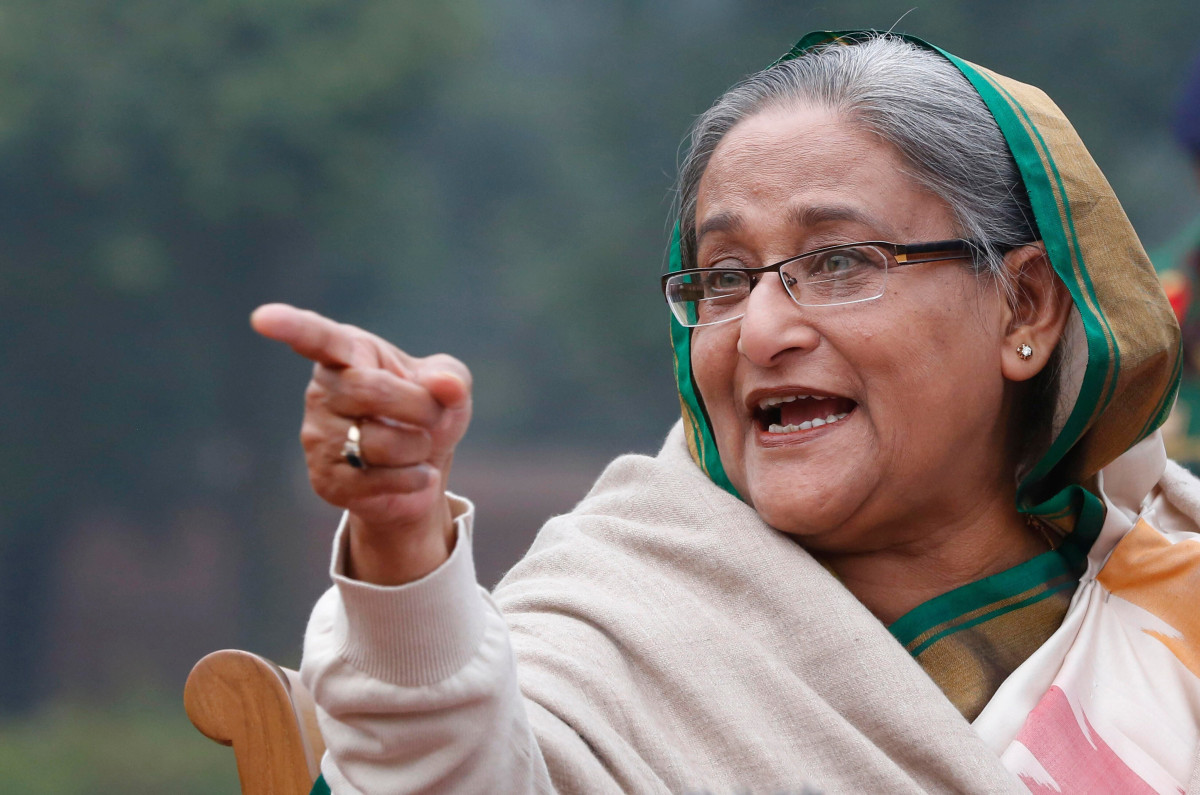
Exiled former Prime Minister of Bangladesh Sheikh Hasina has strongly criticized the upcoming general election from her exile in India, saying the polls cannot be inclusive, free, or fair after her party, the Awami League, was banned from participating.
Hasina, who was sentenced to death in absentia over the crackdown on a student movement in 2024, warned that Bangladesh could face prolonged political instability if an inclusive election is not held. In an email response to the Associated Press last week, she said excluding major political forces would push the country into deeper uncertainty.
She accused the interim government led by Nobel Peace Prize laureate Muhammad Yunus of deliberately keeping the formerly ruling Awami League out of the electoral process, thereby depriving millions of supporters of their voting rights. According to Hasina, excluding a large section of the population from political participation deepens resentment, weakens institutions, and lays the groundwork for future instability.
Hasina said a government formed through exclusion would not be able to unite a divided nation. She also stressed that political bans and boycotts must end, arguing that only a legitimate government based on the genuine consent of the people can help the country heal.
The general election scheduled for February 12 will see around 127 million eligible voters. Considered one of the most significant elections in decades, it will be the first since Hasina was removed from power following a mass uprising.
The interim administration is overseeing the election, and voters will also cast ballots in a referendum on proposed constitutional reforms. Hasina fled to India on August 5, 2024, following violent protests, and Yunus returned to Bangladesh three days later to assume office. He has pledged to hold free and fair elections.
However, critics have questioned whether the election can truly be inclusive given the ban on the Awami League. Concerns have also been raised about security conditions and the potential for the referendum to bring major constitutional changes.
Yunus’s office has said security forces will ensure a fair election and prevent violence from influencing the outcome. International observers and human rights organizations have also been invited to monitor the process.
Since Hasina’s removal, concerns have grown in Bangladesh over human rights, minority protection, and press freedom. Allegations have emerged of increasing influence by Islamist groups and attacks targeting the Hindu community.
Meanwhile, the Bangladesh Nationalist Party (BNP), led by Tarique Rahman, has emerged as the main contender in the election. Rahman has pledged to work toward restoring stability in the country.
About the Author