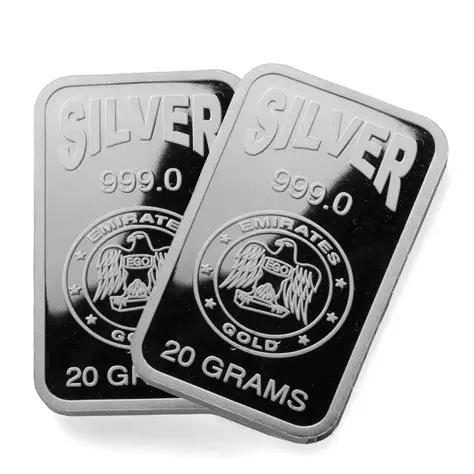
On Sunday, the price of silver in Nepal was fixed at Rs 5,500 per tola. This rate is nearly Rs 300 higher than what it should be after factoring in international market prices and applicable customs duties in Nepal.
Generally, gold and silver are sold in Nepal by adding around 11 percent to the international market price. This includes a 10 percent customs duty, about 0.5 percent charged by banks for import-related costs and margin, and the remaining 0.5 percent taken as profit by traders. As a result, precious metals in Nepal are usually priced about 11 percent higher than international rates.
On Sunday, the international price of gold stood at USD 157.32 per gram, while the exchange rate was Rs 147.48 per US dollar. Based on this, the international gold price comes to Rs 23,201.55 per gram. After adding customs duty, bank charges, and traders’ margins, the Federation of Nepal Gold and Silver Dealers’ Association fixed the gold price at Rs 25,720 per gram in the domestic market.
Since one tola equals 11.664 grams, the gold price comes to approximately Rs 300,000 per tola. The Federation usually rounds prices up or down by around Rs 1,000 per tola, and based on this practice, the domestic gold price appears consistent with international prices and applicable duties.
However, silver pricing tells a different story. The Federation fixed the silver price at Rs 5,500 per tola on Sunday, which is significantly higher than the price calculated based on international rates and standard charges.
In the international market, silver was priced at USD 2,743.86 per kilogram. Converted into Nepali currency, this amounts to Rs 404,664.47 per kilogram. After adding 10 percent customs duty, 0.5 percent bank charges, and 0.5 percent trader margin, the silver price in Nepal should have been around Rs 449,177 per kilogram.
Based on this calculation, the domestic silver price should have been Rs 449.17 per gram. Since one tola equals 11.664 grams, the price per tola should have been Rs 5,239.20. Instead, the market price was fixed at Rs 5,500 per tola—around Rs 260 higher than the justified rate.
Explaining the higher price, Diyash Ratna Shakya, Vice President of the Federation and Coordinator of the Price Determination Committee, said silver had to be imported by paying a premium due to high demand. He stated that silver demand has surged recently, and banks importing silver from the international market have been paying higher premiums, which has increased overall costs.
According to Shakya, while normally silver is imported by paying a premium of around 0.2 to 0.5 percent above international prices, the recent spike in demand has forced banks to pay significantly higher premiums. He said that banks still add 10 percent customs duty, around 0.5 percent for bank charges, and traders add another 0.5 percent margin, resulting in the usual 11 percent markup.
Shakya told Lokpath that Prabhu Bank and Citizens Bank were the most recent importers of silver, and he had heard they paid premiums of up to 4 percent to secure supply. This additional premium, he said, is the main reason silver prices in Nepal are currently higher than international benchmarks.
About the Author