The famous Biska (now commonly known as Bisket) Jatra has begun in Bhaktapur. Locally called “Biska,” the festival is today widely recognized as “Bisket.”
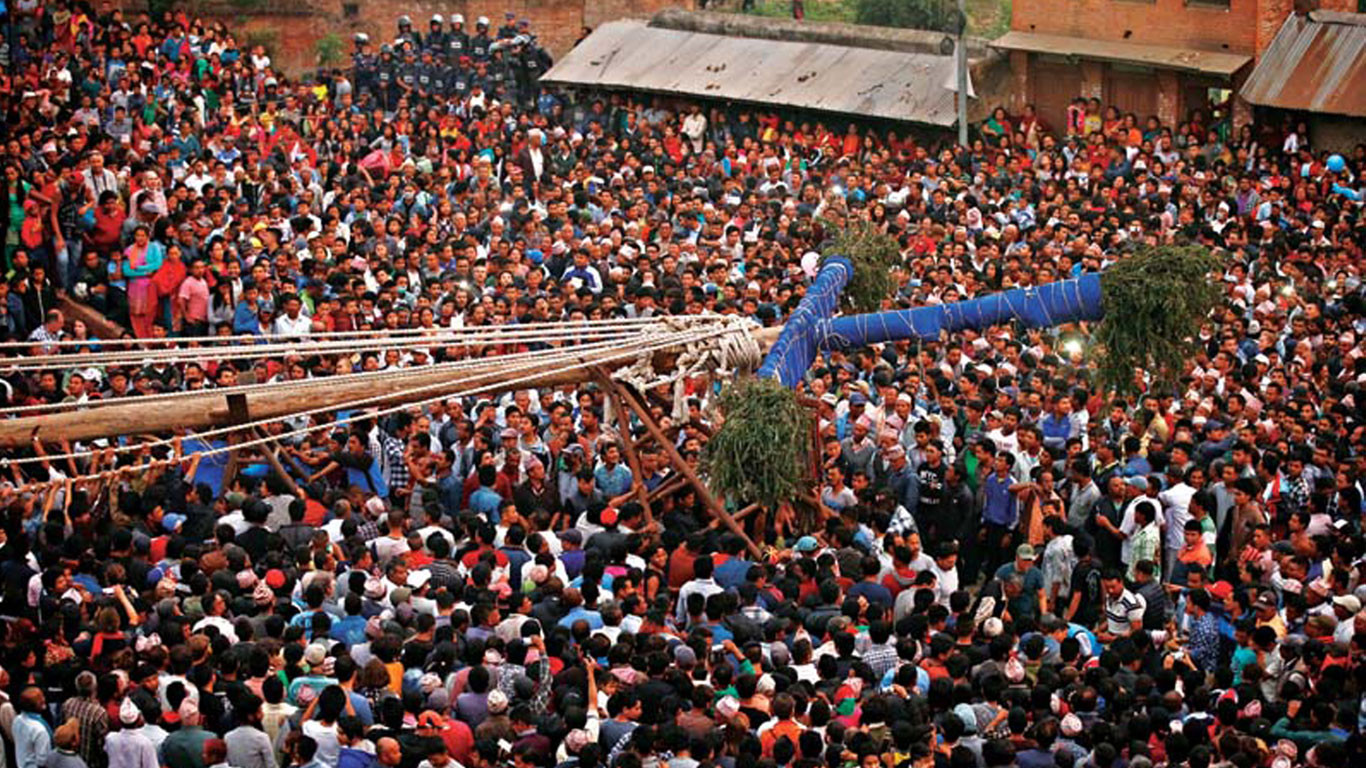
The festival commenced with the pulling of the three-tiered pagoda-style chariot of Bhairavnath, constructed in the courtyard of the five-storied temple and the Bhairavnath temple area in the heart of the city. This day is locally known as Dyo Kwah Bijyaigu, meaning “the day the deity descends for a ride.”
Holding deep historical and cultural significance, Biska Jatra begins with the arrival of the Nepali New Year and is celebrated with great enthusiasm in Bhaktapur for eight nights and nine days, while it is observed for three days in Thimi.
On the first day of the festival, the chariots of Bhairavnath and Bhadra Kali are pulled through the streets. The tradition of Biska Jatra, which follows the solar calendar of the Bikram Sambat, has been celebrated since the Licchavi period. The term is believed to be derived from “Bi:Syat,” meaning “the death of serpents.”
Cultural historian Purushottam Lochan Shrestha explains that a Nepal Sambat 500 document found in Thimi mentions the word “Bisik” as a synonym for “Vishwaketu.” An inscription from the era of King Yaksha Malla at Taumadhi, Bhaktapur, refers to the festival as “Vishwajatra.” Similarly, inscriptions from the reigns of Kings Jitamitra Malla and Bhupatindra Malla (Nepal Sambat 808 and 818) mention the term “Vishkyat.”
Even today, during ritual worship at the Taleju temple, the term “Vishwajatra” is used in the festival’s sacred invocation. According to Shrestha, “Vishwaketu” is a Sanskrit term that gradually evolved through Newari naming into Bisika, Bisk, Bikka, Biska, and eventually Bisket.
He further explains that the festival is dedicated not only to Vishwanath Bhairav but also to his consort Bhadra Kali. The pair of flags hoisted on the ceremonial pole (lingo) symbolize Bhairav and Bhadra Kali.
Some cultural scholars interpret the word “Bi” as serpent and “Syat” as killed, linking the name Bisket to the myth of the serpent’s death. However, historians argue that “Bi” signifies departure, symbolizing the farewell to the old year and the welcome of the new year.
The three-tiered chariot, built in pagoda style, carries the main idols of Bhairavnath and Betal brought from the Bhairavnath temple after tantric rituals. The chariot pulling begins from the courtyard of the five-storied temple in the Taumadhi area.
Locals from the lower (Kwone) and upper (Thane) sections of the town compete by pulling the ropes from the front and back of the chariot, each trying to bring it toward their neighborhood. The area that succeeds in pulling the chariot to its locality is considered victorious.
This intense chariot pulling is the main attraction of the festival. Tradition holds that the first day’s celebrations conclude after the chariot is brought to the Gahiti neighborhood.
About the Author