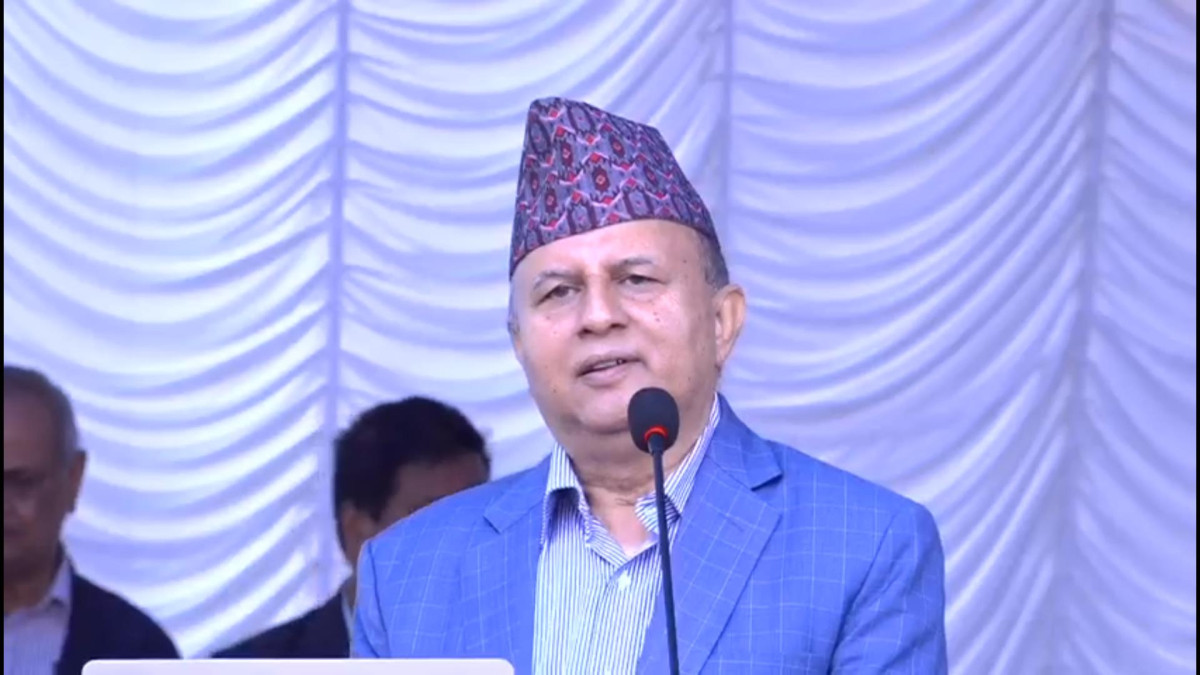
CPN-UML General Secretary Shankar Pokhrel has said that in politics, agendas and direction are far more important than whether a party is new or old. Expressing his views through a Facebook post, Pokhrel described the debate over “new versus old” parties as meaningless.
He wrote that after those trying to push Nepal toward instability similar to Bangladesh began to fail, a narrative was being promoted that new forces must unite to defeat old parties. According to him, labeling forces as “new” without clear policies and agendas does not create a genuine political alternative, but only creates confusion.
Pokhrel argued that while political parties may have long histories, they remain relevant and vibrant if they continuously update their policies and leadership in line with changing times. Parties that fail to adapt, he said, are the ones that eventually disappear, and Nepal’s political history provides many such examples.
He claimed that the CPN-UML is a party that has consistently reformed both its policies and leadership, and therefore possesses not only a vision for the present but also a clear resolve to lead the future. Pokhrel said that calls for uniting “new forces” stem from fear of UML’s continued relevance and vitality.
Questioning who truly qualifies as “new” in Nepali politics, Pokhrel mentioned figures such as Ravi Lamichhane, Balen Shah, Harka Sampang, and Kulman Ghising, stating that all of them have already been tested in one way or another within politics or state power. He also said that the so-called Gen Z movement is not an organized political force but merely an age group shaped by information and technological change.
Pokhrel further claimed that attempts to use youth groups against elected governments reflect capitalist and imperialist thinking, often linked to ideas such as “deep state” and so-called color revolutions aimed at weakening popular leadership. He said that while there were attempts to push Gen Z protests in that direction, a large section of Nepali youth quickly understood the conspiracy.
According to him, many activists who led earlier protests are now in continuous dialogue with UML leadership against such conspiracies, and despite various pressures, UML remains more popular among youth than so-called new forces. He concluded that recent efforts to forcibly unite new actors against old parties have lost their relevance and no longer hold political meaning.
About the Author