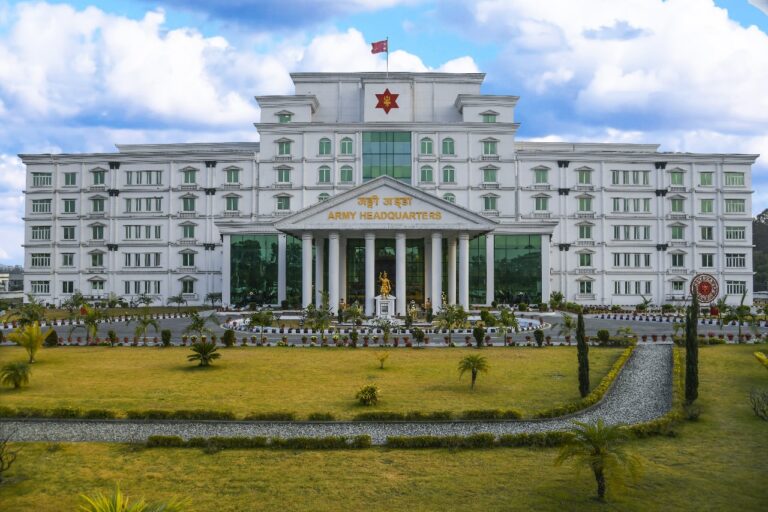
The Nepali Army is preparing to mobilize 80,000 personnel for the House of Representatives election scheduled for Falgun 21. According to Nepali Army Assistant Rathi and spokesperson Rajaram Basnet, the Integrated Security Plan 2082 related to the election has been approved by the government and endorsed by the President, and troop deployment will take place accordingly.
He stated that the army will be deployed in the field starting one month before the election, as guided by the integrated security plan. The security plan has also been approved by the National Security Council in relation to the mobilization of the Nepali Army. The army will work in three phases during the election period. In the pre-election phase, its main responsibilities will include the security of ballot paper printing and the protection of vital installations.
In coordination and cooperation with Nepal Police and the Armed Police Force Nepal, the Nepali Army will be responsible for the security of airports, prisons, and other sensitive infrastructure. In connection with the election, the army will also conduct integrated training and exercises related to election security at grassroots levels, in coordination with all four security agencies and district administrations. These trainings and exercises are aimed at facilitating the conduct of the election in a clean, free, fair, and fear-free environment.
During polling, the Nepali Army will remain in the third security ring at polling stations and centers, ensuring full security for political parties, candidates, voters, and election personnel. As in past elections, the army is also preparing to establish security bases at various locations across the country. After voting concludes on Falgun 21, the army will be responsible for the transportation of ballot boxes and the security of vote counting centers.
To ensure the election is held on time in a fear-free environment, security coordination meetings are currently being conducted at the provincial level. Based on suggestions received from these meetings, the government will further assess and analyze the situation and make additional security arrangements if necessary. The Nepali Army has stated that it is fully prepared to provide election security, which it considers a primary responsibility of the state, through close coordination and cooperation among all security forces, local administrations, and elected representatives.
About the Author