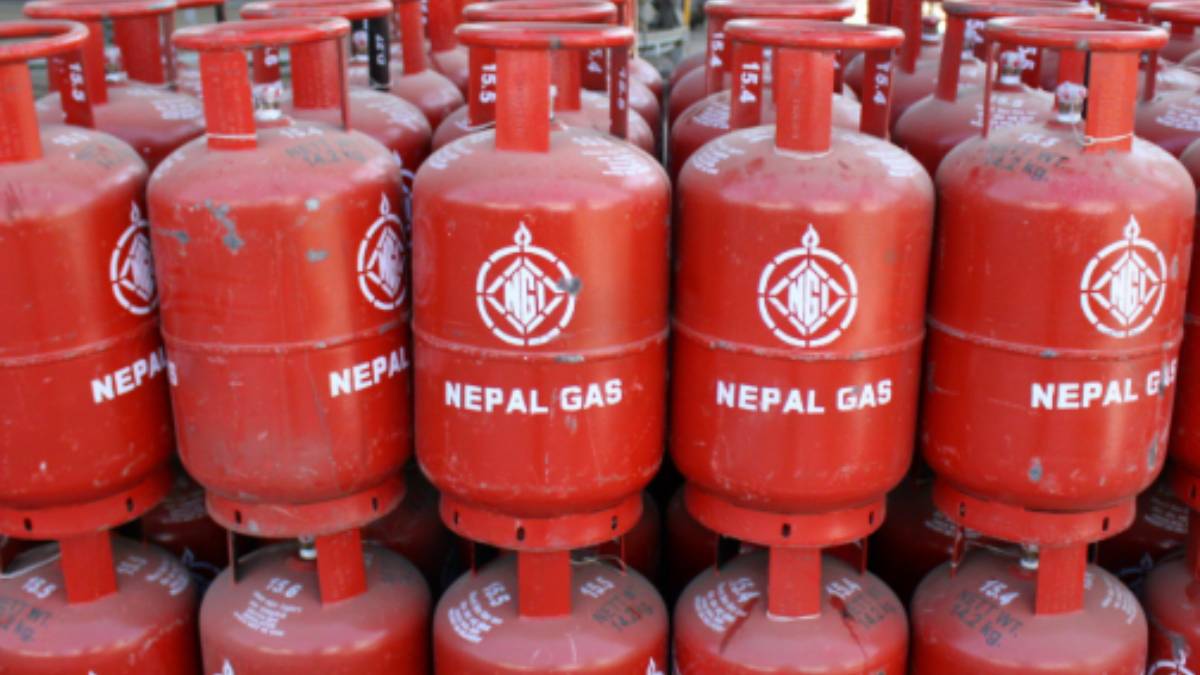
The supply of LPG in the Nepali market has become strained over the past week after imports from India failed to meet demand, forcing consumers to face shortages.
Nepal Oil Corporation (NOC) stated that the disruption is mainly due to maintenance work at the Barauni Refinery of Indian Oil Corporation (IOC), which is the largest source of LPG imports for Nepal. As a result, LPG could not be loaded according to the allocated quota from Barauni.
According to NOC, Nepal primarily imports LPG from the Barauni, Mathura, Paradip, and Durgapur refineries in India. Among these, imports from the Mathura refinery have been arriving regularly as per quota. However, due to the aging plant at the Barauni refinery, frequent maintenance is required, causing LPG loading to be halted for two to four days at a time.
Nepal LPG Industry Association President Diwan Chand also acknowledged that only limited quantities of LPG are currently being supplied from Barauni. He said supplies from the Paradip and Durgapur refineries are also lower than expected. Chand explained that LPG consumption rises in India during winter, and IOC prioritizes domestic demand before supplying Nepal, which has further worsened the situation.
During winter, LPG consumption in Nepal—particularly in the Kathmandu Valley—increases by around 20 to 25 percent compared to normal periods. While Nepal generally requires about 47,000 to 48,000 metric tons of LPG per month, imports for the current month are estimated to be limited to around 42,000 to 43,000 metric tons. The shortfall of 4,000 to 5,000 metric tons has led to shortages in the market.
Meanwhile, the lack of supply from Barauni has forced LPG transport vehicles to travel to distant refineries such as Paradip in Odisha, creating a shortage of transport vehicles and further affecting loading schedules. Chand said delays in vehicle availability have also disrupted imports.
According to Chand, although problems in LPG imports have persisted for the past 20 to 25 days, their direct impact on the market has only been felt over the last one to one-and-a-half weeks. Efforts are currently underway to maximize imports using available transport vehicles, and supply is gradually improving. NOC sources said the problem is unlikely to last long, and LPG supply is expected to return to normal within the next one to one-and-a-half weeks.
About the Author