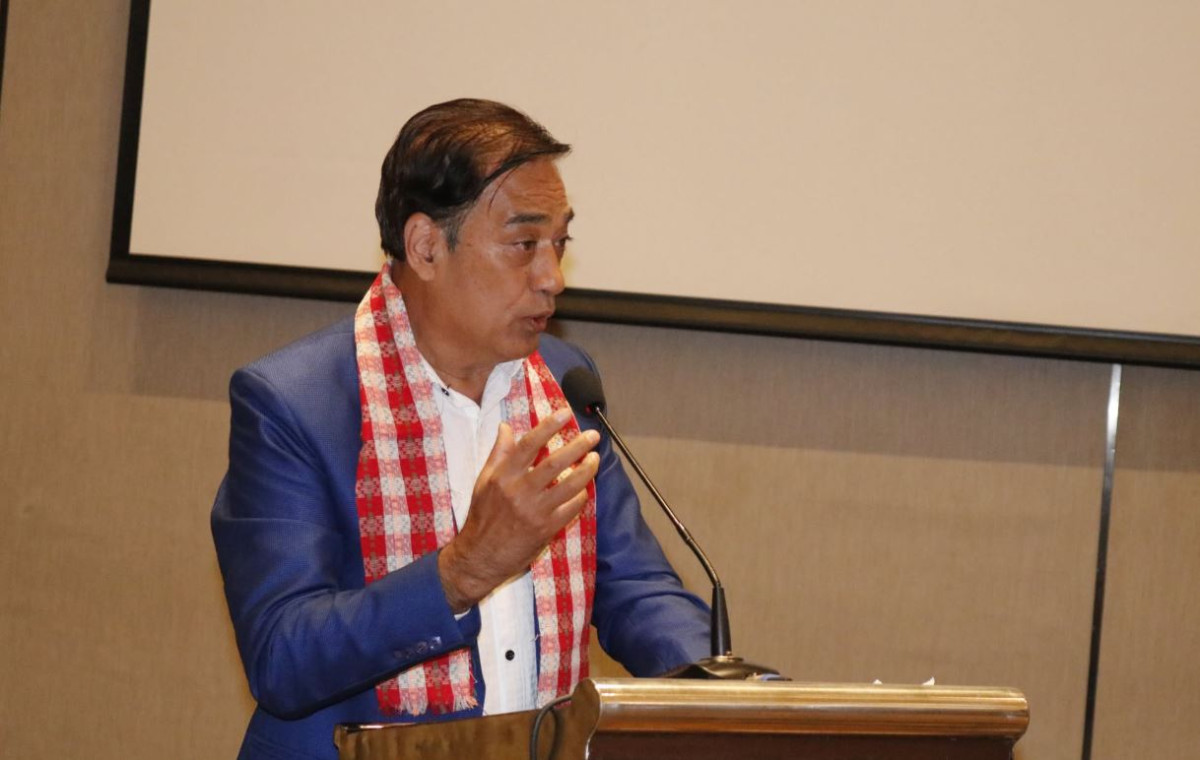
Former President of the Nepal Chamber of Commerce, Rajendra Malla, has said that political parties should release election manifestos that include only those programs which can realistically be implemented in line with the country’s capacity and actual needs.
Speaking at a program on “Economic Agenda in Party Manifestos” held in Kathmandu on Sunday, Malla emphasized that manifestos should not just look attractive on paper but must directly benefit people at the grassroots level. “There are many things that need to be done in our country, so we must move forward with short-term and practical goals,” he said, adding, “Manifestos should be prepared by assessing real needs and financial capacity—like swallowing only as much as the throat can handle.”
He pointed out that political competition often leads to the dominance of negative agendas, but stressed that all parties should come together to build a common perspective on economic issues. Referring to the current economic situation, Malla said around 80 percent of the budget is spent on recurrent expenditure, while development spending is limited to just 20 percent. Due to excessive administrative expenses, investment in productive sectors has declined, he said, calling for clear plans in manifestos to reduce recurrent spending and promote production-oriented activities.
Malla also stressed the need to include the concept of “part-time jobs” in party manifestos to integrate youth into national production. Noting the large-scale migration of young people abroad, he said opportunities must be created within the country, especially for those aged 20 to 25. “In developed countries, work opportunities start early in the morning, which connects youth to productivity. We need to create a similar environment in our country,” he said.
He stated that despite being an agriculture-based country, Nepal has failed to prioritize the agricultural sector, leading to rising food imports. Increased agricultural production would directly improve GDP, he said, urging the government to adopt a national policy against leaving land barren. “In coordination with local governments and ward offices, barren land should be brought into use, and production systems should be adopted based on soil type,” Malla said.
Highlighting the potential of the information technology (IT) sector, Malla noted that while India earns billions of dollars from IT, Nepal’s earnings are limited to only a few billion rupees. He called for expanding IT education from cities to villages and promoting a “learn and earn” model to provide employment opportunities within the country.
Malla also expressed concern over the underutilization of forests and medicinal herbs, stating that despite having ample resources, Nepal still relies heavily on imports. He said medicinal herbs should be developed commercially and promoted for export, and called for serious discussions on regulated cultivation, processing, and promotion of crops such as cannabis.
Finally, pointing to weak government service delivery as a major cause of growing public frustration, Malla suggested that the next government must strictly implement “time-bound action plans.” “An accountability system is needed to explain why work gets delayed,” he said. “Without timely service delivery, the country falls behind, and development is not possible without reform.”
About the Author