The construction of the Seti Bridge in Pokhara of Kaski District has reached 57 percent completion. The bridge, being built under the Mugling–Pokhara Road Expansion Project, is Nepal’s first model bridge using the “extra-dosed cable-stayed” technology.
According to project director Chudaraj Dhakal of the Asian Development Bank (ADB), the design of the bridge is similar to the structure of the Karnali Bridge in Chisapani of Kailali District.
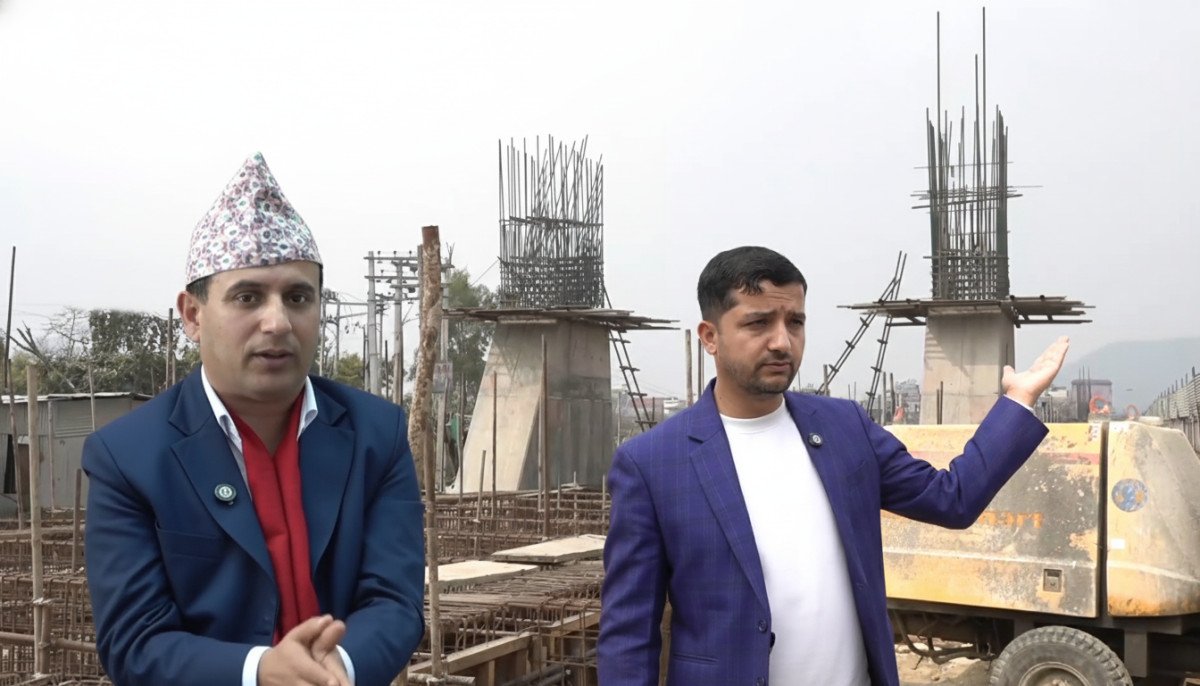
However, while the Karnali Bridge has only one central tower, the Seti Bridge will have two towers. Considering flight safety at Pokhara International Airport, the height of the bridge towers has been limited to just 12 meters due to aviation height restrictions.
Typically, towers of such bridges are between 20 and 30 meters tall, but because the height had to be reduced, the extra-dosed technology has been adopted. The project, being constructed at a cost of NPR 1.07 billion including VAT, involves building two separate bridges of 190 meters each on the upstream and downstream sides of the existing bridge.
Since girders alone cannot bear the total load, cables are installed from above to support the structure. Each girder will be connected with 11 cables. The bridge will also include a 3-meter-wide फुटpath on one side and a utility duct to manage pipelines for drinking water and cables of the Nepal Electricity Authority.
According to project chief Krishna Kunwar of the Mugling–Pokhara Road Project (Western Section), tower construction on both sides of the bridge has already been completed. The downstream (southern) bridge is expected to be completed within the next two months.
However, construction of the upstream (northern) bridge has been delayed due to social issues and compensation disputes. Discussions with local residents are still ongoing regarding the demolition of houses at the construction site and compensation arrangements.
Kunwar said some misinformation may have reached local residents, and continuous discussions are being held from the ministerial level to the project level. Technical integrity checks by the Department of Buildings are also being planned to assess the condition of remaining structures when partial houses are demolished.
Although the project contract requires completion by Baisakh 21, 2083 (Nepali calendar), compensation disputes and other challenges mean additional efforts will be needed to complete the bridge within the scheduled timeframe.
About the Author