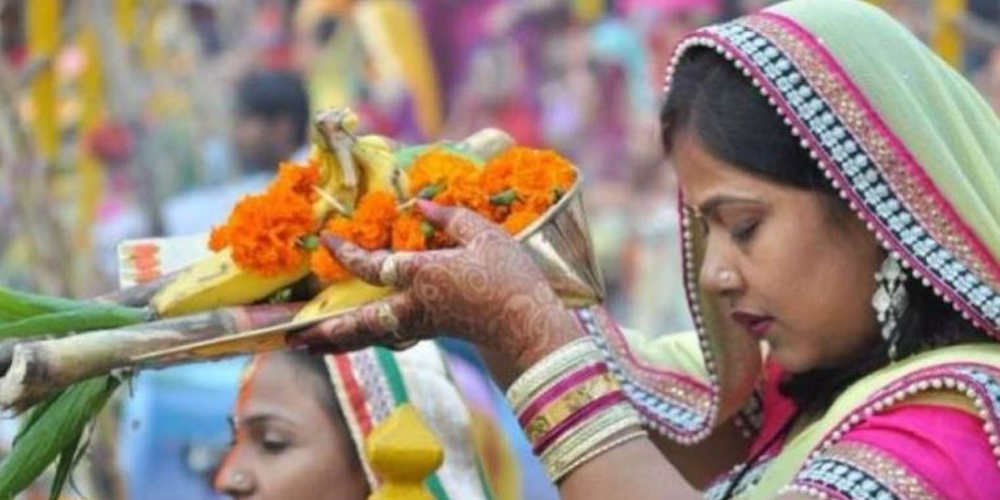
The Chaiti Chhath festival has officially begun today across the Mithila region of Nepal and India, including Mahottari and surrounding Terai districts.
This four-day festival is being observed with traditional rituals in districts such as Dhanusha, Siraha, Saptari, Sunsari, Morang, Sarlahi, Rautahat, Bara, and Parsa.
In Mahottari, the festival is being celebrated with great enthusiasm in places like Jaleshwar, Matihani, Gaushala, and Bardibas, along rivers, ponds, and water bodies including Bighi, Rato Maraha, Jangaha, and Ankusi rivers.
According to priest Kameshwar Pathak of Jaleshwar Nath Mahadev Temple, the festival promotes truth, non-violence, and compassion for all living beings. Chhath is unique as it involves worship of both the setting and rising sun.
Devotees observe the festival for family well-being, peace, prosperity, good health, and fulfillment of wishes. Large crowds gather at riverbanks and ponds during this period.
Rituals of the Four-Day Festival
Day 1 (Nahai-Khai): Devotees purify themselves by bathing and eating simple food.
Day 2 (Kharna): Observers fast the whole day and break the fast at night after पूजा.
Day 3 (Sandhya Arghya): Offerings are made to the setting sun with traditional foods like thekua, fruits, and पूजा items.
Day 4 (Usha Arghya): Devotees offer prayers to the rising sun early in the morning, marking the conclusion of the festival.
Mythologically, the festival is linked to the Mahabharata, where the Pandavas and Draupadi worshipped the Sun God during exile. Another belief from the Surya Purana states that Goddess Anusuya first observed the Chhath fast.
Over time, Chhath has evolved not only as a religious festival but also as a symbol of social harmony, celebrated by both Hindus and Muslims. Devotees traditionally offer up to 70 items, though even simple offerings are believed to please the Sun God.
About the Author