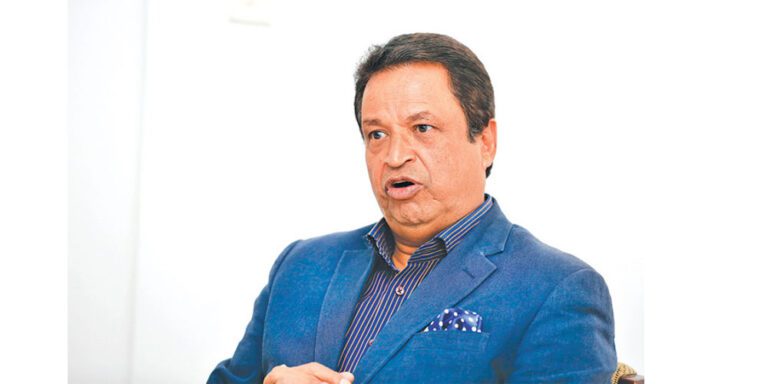
Vinod Chaudhary, a member of the Nepali Congress, had the privilege of giving a statement at the Office of the Attorney General instead of being arrested by the police. Sources say that since the case had not been concluded, the Commission for the Investigation of Abuse of Authority (CIAA) has now started reopening files to bring it to a resolution.
Two years ago, the Central Investigation Bureau (CIB) of the Nepal Police had arrested Arun Chaudhary in connection with this case. The incident highlighted how, in Nepal, laws appear to protect the powerful rather than ordinary citizens—high-profile figures can evade accountability while the law strictly punishes the less influential.
There have been increasing allegations that courts are biased in favor of the influential, police remain passive, and government prosecutors fail to pursue cases. Despite evidence of wrongdoing, influential figures often avoid prosecution, while ordinary citizens face legal consequences for minor mistakes. This has raised questions about the principle of “equality before the law.”
The case revolves around the alleged illegal acquisition of 10 ropani of land belonging to the Bansbari Leather and Shoe Factory by the Chaudhary Group. While Arun Chaudhary and the factory’s then-chairman Ajit Narayan Singh were arrested, Vinod Chaudhary and his brother Vasant Chaudhary were initially not summoned due to their political influence. Later, even when they were required to appear at the Attorney General’s office, their statements were taken without further legal proceedings.
The legal argument was that the land had already reverted to government ownership, so no case needed to be pursued. Critics claim that political influence and connections with top leaders of the Nepali Congress, including former party president Sher Bahadur Deuba, protected the Chaudhary Group from prosecution.
Additionally, CG Developers, under the Chaudhary Group, converted government land in the VIP residential area of Bhaisepati into the “CG Hills Premium Bhaisepati” housing project, allegedly through fast-tracked land allocation within two days in January 2020. Officials from the Lalitpur Land Revenue and Survey Office reportedly handed over government land under pressure from the Chaudhary Group and Vinod Chaudhary, prompting complaints to the CIAA.
Despite multiple complaints and evidence, the CIAA had not investigated or prosecuted the Chaudhary Group until recently. Locals and stakeholders allege that political pressure prevented proper action, but the files are now expected to be reopened for investigation.
This case underscores concerns over how political power can influence law enforcement and land administration, raising critical questions about accountability and equality before the law in Nepal.
About the Author