
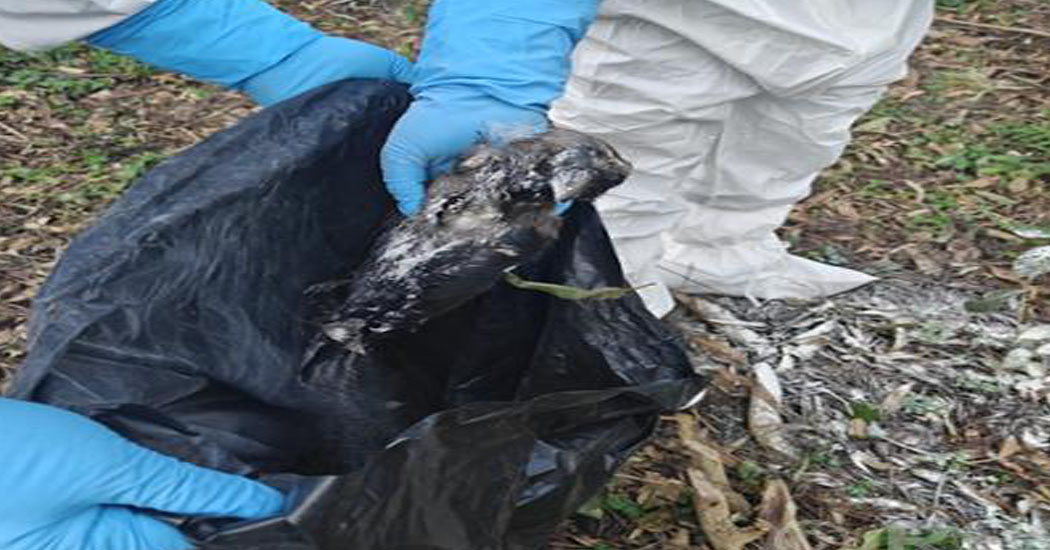
Bird flu infection has been confirmed in a large number of dead crows found within the premises of Tribhuvan University in Kirtipur.
A joint team from Kirtipur Municipality and the Department of Livestock Services collected 68 dead crows from the university area and buried them on Wednesday. However, officials said more dead crows have been spotted, and the collection process will continue on Thursday.
According to Sushila Gaire, head of the municipality’s veterinary section, locals had reported dead crows about a week ago in the Birendra Aishwarya Park within the university premises.
Samples from 10 dead crows were sent to a laboratory under the Department of Livestock Services for testing, which later confirmed bird flu infection. Following the confirmation, authorities decided to collect and safely dispose of the मृत birds.
The collection process began at around 3:00 PM, during which 64 crows were buried in a pit. Officials also instructed the team to collect samples if other dead birds are found in the same area.
Gaire noted that no unusual deaths have been observed among other bird species in the park. She added that controlling bird flu in wild birds like crows is more complex than in domestic poultry, as they move freely in open environments.
The municipality has issued a public notice restricting the transportation of poultry feed within the Kirtipur area as a precautionary measure.
Senior veterinary officer Mukul Upadhyay stated that both H5N1 and H9 strains of the bird flu virus were detected in the dead crows. He suggested that the infection may have spread from migratory birds.
He also mentioned that similar cases had been reported in the past, including an incident at the British Embassy premises in Kathmandu.
Authorities have urged poultry farmers to strengthen biosecurity by preventing contact between domestic birds and wild animals such as birds, dogs, and cats. Farmers have also been advised against raising poultry in open environments.
Officials warned against killing crows indiscriminately due to fear of infection and cautioned the public not to feed dead poultry to pigs or consume cheap chicken meat of unknown origin.
About the Author