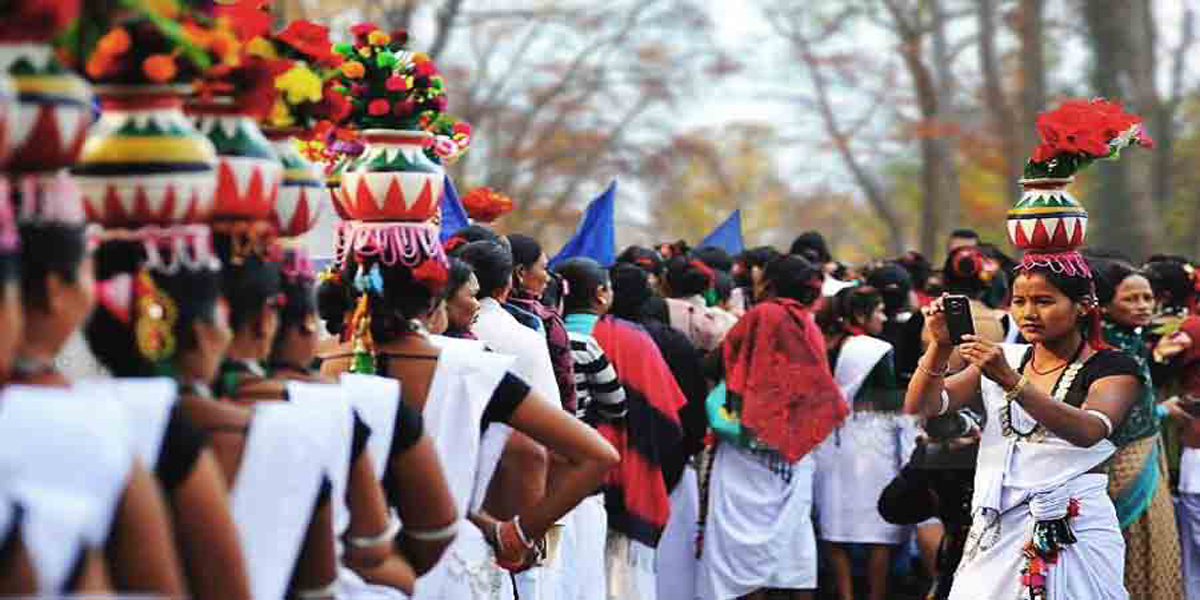
The Tharu community in western Terai is celebrating the Atwari festival today with various programs. This festival is observed on the first Sunday after Kushe Aunsi and is especially marked by brothers fasting for the good fortune and longevity of their sisters.
On Friday night, families prepare a special meal (dar) before beginning a day-long fast on Saturday. In the evening, they prepare bread (roti), which is first offered to deities before consumption. On Sunday morning, rice and vegetables are cooked, again offered to the deities, and then eaten.
According to community leader Saraswati Chaudhary of Ghorahi Sub-metropolitan City–17, after preparing the bread, it is accompanied by yogurt, fruits, and other delicacies, which are offered to the fire god and set aside as agrāsan—a ritual portion dedicated to sisters. Brothers then consume the remaining food. “Atwari is an important festival for us, just like Teej for Hindus. On this day, brothers fast the entire day without even drinking water for the well-being of their sisters,” she said.
As per tradition, food is eaten only after offering agrāsan to the fire god on the first day. On the second day, rice and vegetables are prepared, again offered ritually, and then consumed, said Suraj Chaudhary of Ghorahi–3. The festival concludes when brothers visit their sisters’ homes with gifts of fruits, bread, and other items, strengthening the sibling bond.
There is also a mythological link to the Mahabharata. According to legends, the festival honors Bhima, one of the Pandavas, who once fought on behalf of the Tharu King Dangisharan of Dang. When enemies attacked the king’s kingdom, Bhima left his half-cooked bread, went into battle without food or water, and helped defeat the enemies. Since then, Tharu men observe a waterless fast, seeking to gain strength like Bhima.
Atwari is also considered symbolic of the sun as a source of light and energy, said Tharu cultural expert Ashok Chaudhary.
Meanwhile, the Lumbini Province Government has declared a public holiday today in six districts with a large Tharu population: Dang, Banke, Bardiya, Rupandehi, Kapilvastu, and West Nawalparasi.
About the Author