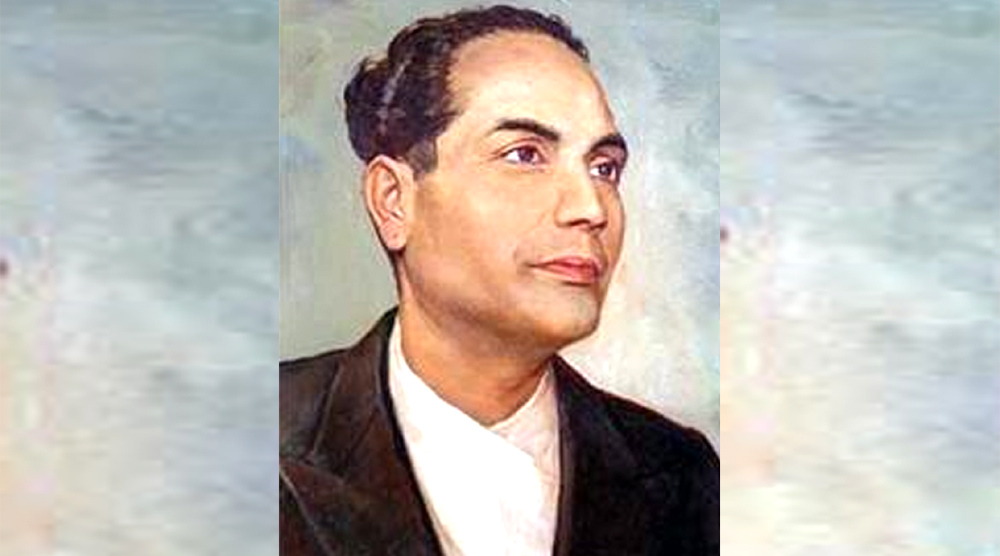
The 117th birth anniversary of Nepal’s literary genius Mahakavi Laxmi Prasad Devkota is being celebrated today across Nepal and abroad through various programs. Devkota was born in 1966 B.S. on Kartik Krishna Aunsi (Laxmi Puja day) at Dillibazar, Kathmandu.
Devkota began writing poetry at the young age of ten and went on to contribute over 100 literary works to Nepali literature, establishing Nepal’s presence on the international literary stage. His masterpiece ‘Muna Madan’, a lyrical epic, is considered the best-selling book in the history of Nepali literature and is credited with introducing the modern epic form to Nepali literary tradition.
A pioneer of the Romantic and Progressive movements in Nepali literature, Devkota’s writings reflect themes of humanism, love for nature, and revolutionary spirit. His works show a harmonious blend of Eastern and Western philosophies. Indian scholar Rahul Sankrityayan compared Devkota alone to the combined stature of India’s three great poets—Sumitranandan Pant, Jaishankar Prasad, and Suryakant Tripathi ‘Nirala’. Similarly, Nepal’s theatre pioneer Balkrishna Sama said Devkota was “born three times” through his creations—‘Muna Madan’, ‘Shakuntala’, and the poem ‘Pagal’.
Devkota possessed an extraordinary ability to compose poetry instantly. Historical accounts mention that he wrote the epic ‘Shakuntala’ in just three months, ‘Sulochana’ in ten days, and the lyrical poem ‘Kunjini’ in a single day.
In 2016 B.S., while serving as Minister of Education and Autonomous Governance, Devkota made Nepali language a compulsory subject across the country and played a pivotal role in the establishment of the present Nepal Academy (Pragya-Pratishthan). Despite financial hardship, personal tragedy, and political involvement, Devkota continued to enrich Nepali literature with works of great depth and brilliance. He also translated his famous poem ‘Pagal’ (The Lunatic) into English himself and produced numerous remarkable literary writings inspired by Greek classical sources.
His unmatched legacy continues to inspire generations of readers, writers, and literary scholars in Nepal and beyond.
About the Author