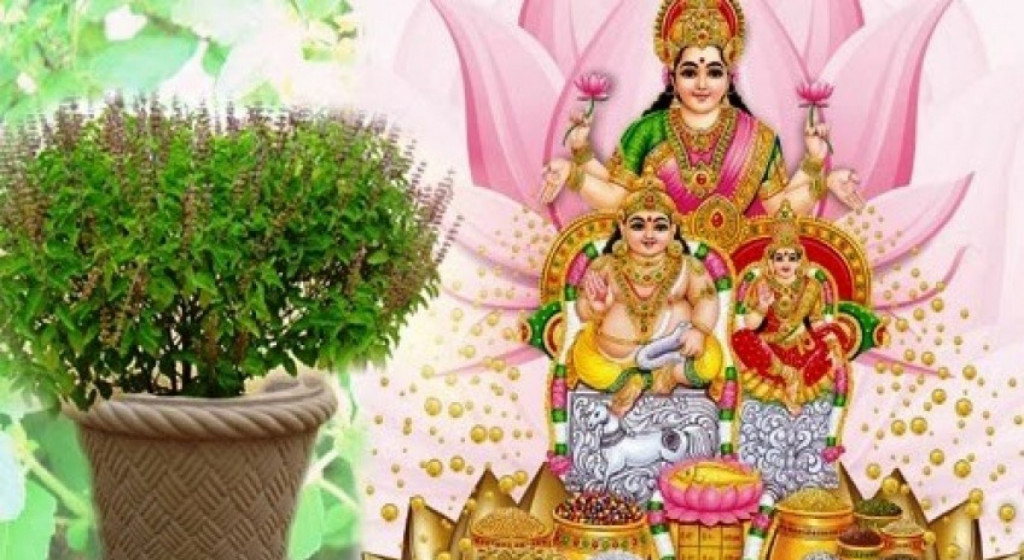
On the day of Kartik Shukla Ekadashi, devotees across Nepal are celebrating Haribodhini Ekadashi by performing special worship rituals and conducting the symbolic marriage ceremony of Tulsi (holy basil) with Lord Vishnu.
According to Hindu belief, Lord Vishnu, who goes into a divine sleep in the Kshira Sagar (Ocean of Milk) on Ashadh Shukla Ekadashi — also known as Harishayani Ekadashi — awakens on this day. Hence, this Ekadashi is also called Haribodhini or Prabodhini Ekadashi. Devotees observe the Tulsi fast and worship continuously during these four months, from Harishayani to Haribodhini Ekadashi.
As Lord Vishnu is believed to be asleep during these four months, no auspicious events such as marriages or rituals are performed. This period is also considered unsuitable for travel, as it coincides with the monsoon season, floods, and the increased presence of snakes and insects.
On Haribodhini Ekadashi, devotees clean and decorate the Tulsi altar (Tulsi Math) with cow dung, red soil, and garlands of flowers. The symbolic wedding of Lord Vishnu and Tulsi is then performed with traditional rituals. It is believed that Lord Vishnu resides in the Tulsi plant throughout the month of Kartik.
The Tulsi plant holds both religious and scientific significance. Homes with a Tulsi altar are regarded as sacred as pilgrimage sites. The aroma of Tulsi is said to purify the surroundings, and it is believed that the messengers of Yama (the god of death) do not enter such homes. Medicinally, Tulsi’s leaves, stems, and flowers are used to treat colds, coughs, and other ailments. Applying Tulsi juice on the skin repels mosquitoes, and its presence deters venomous snakes and insects by purifying the surrounding air.
According to the Garuda Purana, offering even a single Tulsi leaf to Lord Vishnu during this month brings spiritual merit equivalent to donating ten thousand cows. Wearing a Tulsi garland in Kartik and offering one hundred thousand Tulsi leaves to Vishnu is believed to fulfill one’s wishes.
Devotees also carry Lord Vishnu’s idol in a chariot procession today, symbolizing his awakening. At night, conch shells, bells, and drums are played while chanting, “Govinda, please wake up! When you sleep, the world sleeps; when you awaken, the world awakens.”
Special fairs and worship events are being held today at the four Narayan temples in the Kathmandu Valley — Changu Narayan (Bhaktapur), Shesh Narayan and Ichangu Narayan (Kathmandu), and Bishankhu Narayan (Lalitpur). For those unable to visit these sites, it is believed that visiting Budhanilkantha Narayansthan in northern Kathmandu yields equivalent blessings. Similar worship ceremonies are being held in Narayan temples across the country to celebrate this sacred festival.
About the Author