A wastewater treatment plant with a daily capacity of 150 million liters is under construction to clean Kathmandu’s Tukucha River before it merges into the Bagmati. The plant is being built on 2.53 hectares of land located along the Bagmati River in Tripureshwar, Kathmandu, and Kupondole, Lalitpur.
The project will channel Tukucha’s wastewater to the new treatment plant, where it will be processed and released as clean water into the Bagmati River. The facility will also generate 800 kilowatts of electricity as a by-product.
Currently, the physical structures on the Tripureshwar side of the treatment plant are being constructed. However, work on the Lalitpur side has not yet begun due to obstructions from local residents. Only the electricity-generating structures will be located on the Lalitpur side, while the main wastewater treatment structures are being built in Tripureshwar.
Overall physical and financial progress of the project stands at 20 percent.
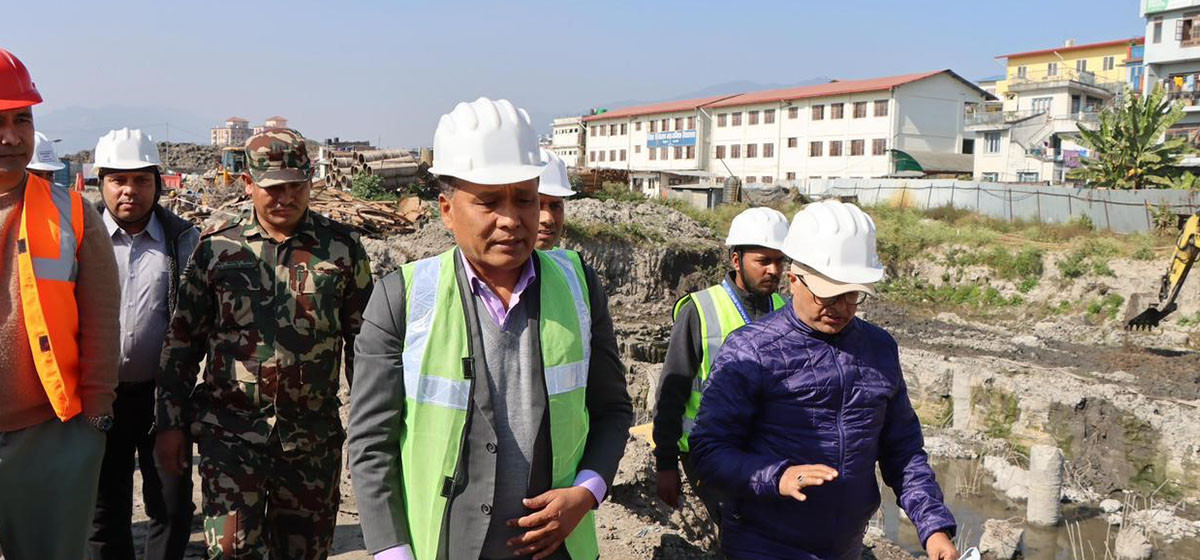
On Saturday, Minister for Energy, Water Resources and Irrigation; Physical Infrastructure and Transport; and Urban Development, Kulman Ghising, conducted an on-site inspection of the construction work. During the visit, he discussed the construction schedule, challenges, and required policy decisions with project managers, consultants, and contractors.
He instructed the teams to accelerate construction, noting that work can now proceed from all parts of the site. Minister Ghising stated that delays occurred earlier due to the removal of trees from the site—which took nearly two years—and due to local obstructions on the Lalitpur side. He emphasized the need to speed up the work moving forward.
He also mentioned that the government has prioritized cleaning the Bagmati River by managing its tributaries and riverbanks. Contractors have pledged to complete the structures on the Tripureshwar side within the designated timeline.
The treatment plant is being built with concessional loans under the Asian Development Bank’s Bagmati River Basin Improvement Project. The total project cost is Rs 3.18 billion. The construction contract was signed in May 2022, and with the extended deadline, the project is scheduled for completion by December 2026.
About the Author