
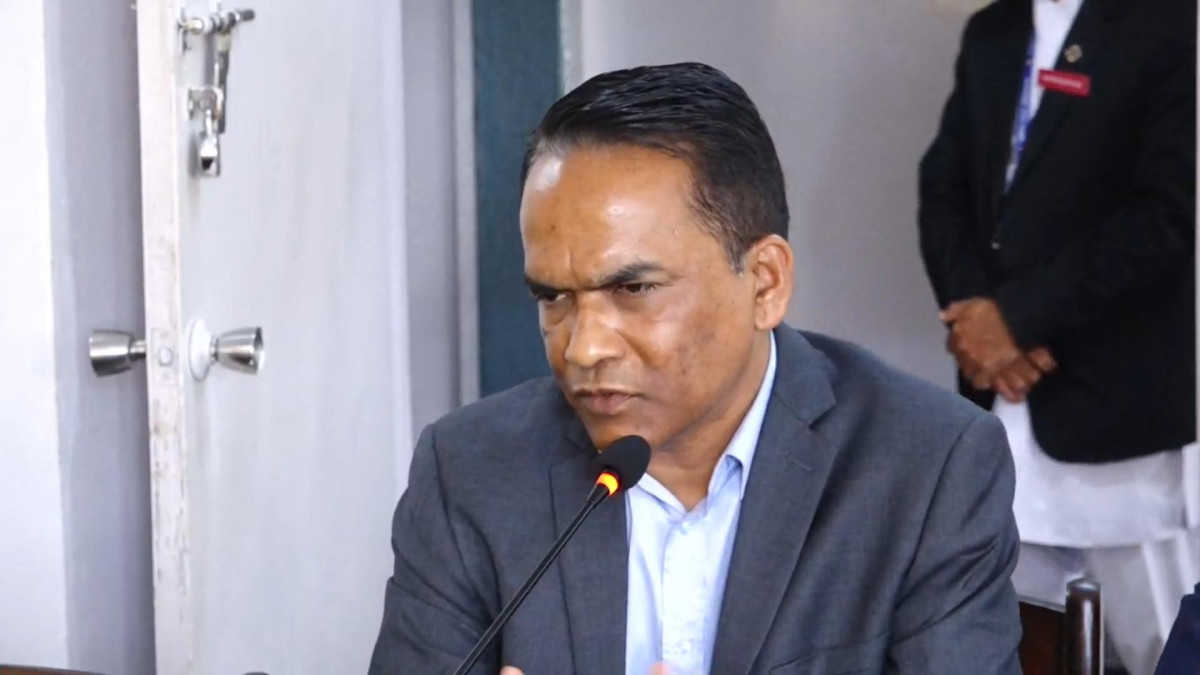
Nepal Rastra Bank Governor Dr. Bishwanath Paudel has announced that the long-controversial blacklist system is now undergoing a formal review process for major reforms.
Speaking at the anniversary event of the Nepal Economic Journalists Association, Governor Paudel said that the blacklist provision has been one of the key reasons behind slow investment growth in the country, and a detailed study for reform has already begun.
According to him, despite sufficient liquidity in the banking sector, credit expansion remains weaker than expected. Out of 1.8 to 1.9 million loan customers in the country, around 800,000 to 900,000 are unique borrowers, and nearly 150,000 of them are currently blacklisted — a situation that has significantly affected credit growth.
He also announced that the provision under which an entire investment group is blacklisted due to the fault of a single individual will be removed. Such a rule has unnecessarily pressured entrepreneurs and increased risks for investors, prompting the central bank to move toward policy amendments.
Governor Paudel further highlighted the malpractice of undervaluing collateral during auction sales, calling it a major form of corruption seen within the private sector. He warned that activities such as undervaluing collateral, creating unnecessary pressure on borrowers, or attempting to sell assets at cheap prices would no longer be tolerated.
Additionally, he noted a rising trend of intermediaries offering to “arrange loans” by taking clients directly to bank managers. The central bank has issued directives to stop this practice, stressing that loan processing must be completely clean and transparent.
Clarifying that the first review of the monetary policy does not set very ambitious targets, Governor Paudel added that banks within metropolitan areas may be adjusted based on necessity.
He concluded by stating that banks and financial institutions must now focus on channeling credit into productive sectors to ensure higher economic returns.
About the Author