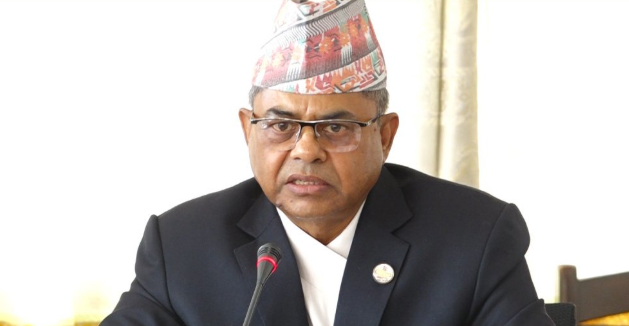
Anil Kumar Sinha, Minister for Industry, Commerce and Supplies, has claimed that the ministry achieved significant progress in promoting good governance, industrial development, trade facilitation, and supply management during his tenure.
According to the details made public by the minister, the ministry placed strong emphasis on policy reforms, use of digital technology, and entrepreneurship development. Following the formation of the interim government after the “Gen-Z Movement” of Bhadra 23–24, 2082, the ministry implemented an immediate reform action plan to improve public service delivery.
An integrated office management system has been in operation since Mangsir 15, 2082, and a governance roadmap has also been prepared. The ministry has issued the E-commerce Directive 2082 and drafted a preliminary industrial policy. Efforts have also been made to streamline the implementation of the United Nations Convention against Corruption.
In the industrial sector, a draft of the Company Bill 2082 is under preparation. A provision allowing foreign investment up to NPR 500 million through an automatic route has been published in the Nepal Gazette, expanding sectors eligible for such approvals. Additionally, thresholds on foreign investment services have been removed to facilitate investors.
During this period, 13,487 companies were registered while 1,363 were dissolved. A total of 781 industries were registered with proposed investments worth NPR 130 billion. Investment commitments of NPR 261 billion across 656 industries have been approved, with a projected creation of 25,383 jobs. Similarly, 475 foreign investment projects were approved, bringing commitments worth NPR 39.23 billion.
The ministry also ensured service continuity by digitizing records after physical files were damaged during protests. New guidelines for micro-enterprise development and entrepreneurship programs have been introduced, while the “Make in Nepal” campaign has been promoted to boost domestic production.
Procedures for business promotion centers and startup loan programs have been approved, and discussions on women in startups have been conducted. In mining, drilling operations have been carried out and a review committee formed to expedite licensing.
On the trade front, import licenses are now issued fully online. Nepal has enhanced transit and trade facilitation agreements with India, Bangladesh, and China, including expanded cargo transport routes. Key dry ports such as Bhairahawa, Kakadbhitta, and Tatopani have resumed full operations after repairs.
To ensure supply during festivals, subsidized shops have been operated through the Food Management and Trading Company and Salt Trading Corporation. Transport of salt at subsidized rates has been ensured in 61 locations across 17 remote districts. A toll-free number has also been introduced at Nepal Oil Corporation to manage public grievances, while smooth nationwide supply of petroleum products has been maintained.
About the Author