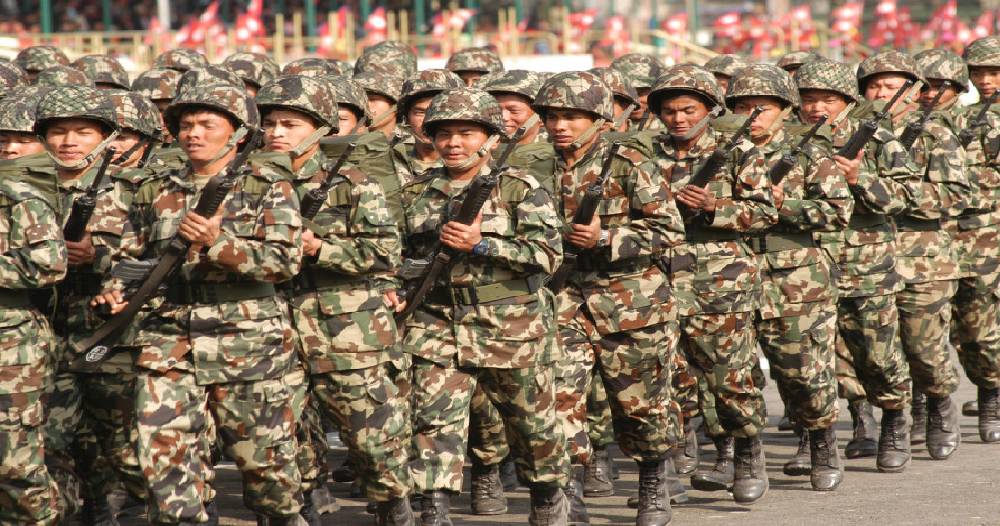
The government has decided to deploy the Nepali Army starting Wednesday to ensure security for the House of Representatives election scheduled for Falgun 21, beginning the deployment one month in advance.
According to the Directorate of Military Public Relations, the army will be mobilized nationwide from Wednesday in line with the Integrated Election Security Plan, 2082, which has already been approved. A total of 79,727 Nepali Army personnel will be deployed for election security.
Under the plan, the army will also take responsibility for guarding public buildings, prisons, airports, Singha Durbar, and other key installations currently protected by the Armed Police Force, as large numbers of police personnel will be deployed directly in the field for election duties. The Armed Police Force will also be mobilized for election security.
The decision follows earlier demands from political parties for a guaranteed security environment ahead of the election. Based on recommendations from the Election Commission’s high-level security committee, President Ramchandra Paudel approved the deployment of the Nepali Army on Mangsir 11.
In total, 337,911 security personnel will be mobilized nationwide for the election, including all four security agencies and election police. Of these, 75,597 personnel from Nepal Police, 130,980 election police under Nepal Police, 34,576 Armed Police Force personnel, 15,110 election police under the Armed Police Force, and 1,921 intelligence personnel will be deployed. Training for election police has already begun.
Security forces will conduct regular patrols and joint patrols depending on the sensitivity of areas and polling stations. The Nepali Army will also carry out aerial surveillance, especially in remote and highly sensitive regions. Helicopters will be used for monitoring and for the transportation of ballot papers and ballot boxes, with standby helicopters stationed in Surkhet, Pokhara, Kathmandu, Biratnagar, and Itahari.
Bomb disposal teams have also been deployed, particularly focusing on highly sensitive polling centers, amid concerns about possible attempts to disrupt the election.
Based on lessons learned from previous elections and an assessment of the current security situation, security officials concluded that early deployment of the Nepali Army was necessary to ensure a free, fair, and secure election environment.
About the Author